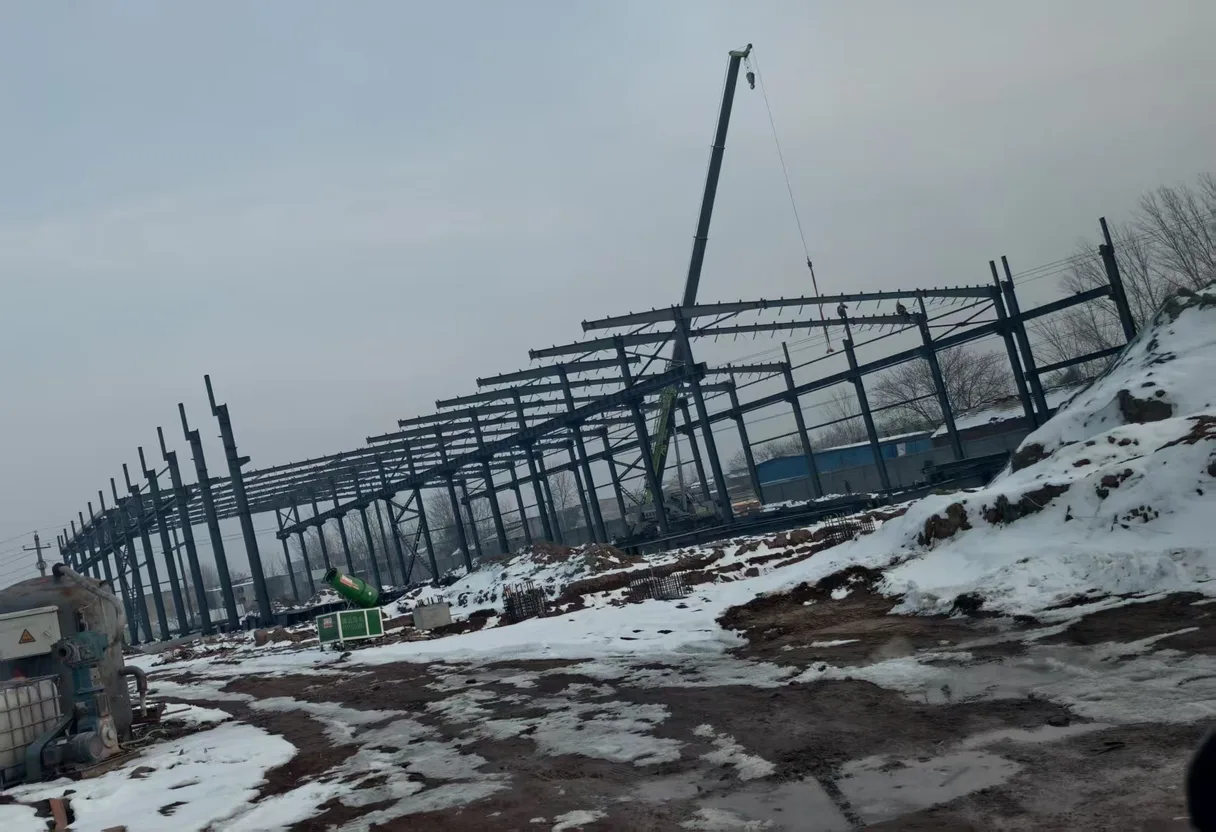
15,000 sqm Factory Complex in Lagos — Phase II Expansion
Custom 15,000 sqm factory complex in Lagos, Nigeria. Multi-span steel structure, tropical climate design, 30m×3 continuous spans. Get a quote for West Africa projects.
Project Overview
This 15,000 m² factory complex is located in the Lagos Free Trade Zone, Nigeria. Completed in 2024, the project represents Phase II of a multi-stage manufacturing plant expansion. The facility required a massive column-free production floor to accommodate heavy manufacturing equipment and material handling systems.
The structure features three continuous 30-meter spans (total 90m width) by 167 meters length, with 10 meters eave height. Total steel consumption: 580 tons of Q355B and Q235B steel. The design accounts for Nigeria's tropical climate (high humidity, salt air from nearby Atlantic coast), with enhanced corrosion protection throughout.
All structural design was carried out considering relevant British Standards (adopted by Nigeria) and the Nigerian Building Code. Our engineering team provided full structural calculations, fabrication drawings, and erection manuals. The client appointed a UK-based consulting engineer for design review and certification.
Project Challenges
1. Tropical Climate Corrosion Protection. Lagos's coastal location creates a highly corrosive environment (C4 corrosion category per ISO 9223). Standard painting systems were insufficient. We upgraded to a 420μm DFT epoxy-polyurethane system with zinc-rich primer, suitable for 15-year service life in tropical coastal conditions.
2. Three Continuous 30m Spans Without Intermediate Columns. The client required a fully column-free production floor across all three spans. This required careful design of the main rafters (H900×350×16×28) with mid-span splice connections designed for both moment and shear transfer.
3. High Humidity and Ventilation Requirements. The manufacturing process generates significant heat and humidity. The client required natural ventilation equivalent to 10 air changes per hour. We designed continuous ridge vents (120 units, 1.5m wide each) with automatic openers linked to internal temperature sensors.
4. Nigerian Port Congestion and Inland Transport. Lagos ports (Apapa and Tin Can) are frequently congested, with truck queuing times of 7-14 days. We optimized container sizes (using 20ft containers for heavy H-sections to reduce individual container weight) and coordinated with the client's logistics provider for up-country transport from Lagos port to the Free Trade Zone (40km distance).
Our Solution
Design Phase: Our engineering team developed a 3D structural model of the 90m × 167m × 10m multi-span structure. The model accounted for trapezoidal wind load distribution (per BS 6399-2), a 1.5 kN/m² roof live load (for maintenance access and occasional roof-mounted equipment), and a 5.0 kN/m² floor live load for heavy manufacturing equipment.
Fabrication: All H-sections were CNC-cut from Q355B steel plate. The tropical climate coating system consisted of: 1×75μm epoxy zinc-rich primer, 2×125μm epoxy intermediate coats, 1×95μm polyurethane topcoat. All bolted connections use hot-dip galvanized 8.8/S grade bolts. Secondary members (purlins, girts) are pre-galvanized Z-sections (Z200, 2.5mm thick).
Ventilation System: We installed 120 continuous ridge vents (each 1.5m wide × 8m long) along the roof ridges. The vents use automatic openers (12V DC, solar-powered) that activate when internal temperature exceeds 28°C. This provides natural ventilation without electricity costs, critical for Nigeria's intermittent power supply.
Cladding System: The roof uses 0.53mm galvanized steel sheeting with acrylic coating (15-year warranty). Walls use 100mm rockwool sandwich panels (Fire rating: 2-hour, BS 476 Part 22) suitable for industrial fire safety requirements. All flashings and gutters are hot-dip galvanized after fabrication.
Steel Structure Design
Multi-Span Portal Frame Design
The structure uses three continuous portal frames, each spanning 30 meters. Column spacing: 8 meters (center to center). The frames are interconnected at the eave level with longitudinal rafter beams, creating a rigid diaphragm that distributes lateral loads across all three spans.
Wind Load Analysis (BS 6399-2)
Lagos's wind load calculation follows BS 6399-2 (adopted by Nigeria). Basic wind speed: 40 m/s (maximum credible wind speed for Lagos region). The design applied both static and dynamic wind load cases, with special attention to wind pressure distribution across the three adjacent spans (shielding effect considered per BS 6399-2 Clause 2.1.3.2).
Corrosion Protection Design (ISO 9223)
Lagos's coastal environment falls into C4 (high corrosivity) category per ISO 9223. Our coating system was designed for 15-year durability (medium-term per ISO 12944-1). All exterior members received 420μm DFT coating. Interior members (protected from direct rain) received 280μm DFT coating. All secondary members are hot-dip galvanized (85μm zinc coating thickness per AS/NZS 4680).
Fabrication Process
Material Preparation
All steel plates are sourced from certified mills with EN 10204 3.1 material test reports. Q355B plates are CNC-cut to H-section dimensions. Tropical climate coating requires special surface preparation: steel surfaces are shot-blasted to SA 3.0 (near-white metal, per AS 1627.4) — one grade higher than standard, to ensure maximum coating adhesion in humid environments.
Corrosion Protection Application
The coating system was applied in our climate-controlled coating shop (temperature: 20-25°C, humidity: <65% RH). Each coat was allowed 24-hour flash-off time before the next coat application. DFT measurements were taken at 8 points per member (corners and flat surfaces). Any reading below 90% of specified DFT was repaired with an additional stripe coat.
Precision Fabrication for Multi-Span Alignment
Multi-span structures require exceptional dimensional accuracy — a 5mm misalignment in Span 1 will compound to 15mm by Span 3. We used a 3D coordinate measuring arm to verify all connection hole positions. All columns and rafters were trial-assembled in the factory to verify fit-up before packing.
Quality Control
Laotie Steel operates an ISO 9001:2015 certified quality management system. For this Lagos project, we implemented additional tropical climate QC protocols.
Coating Thickness Quality Control: DFT measurements were taken at 8 points per member (minimum). Statistical process control (SPC) charts were maintained for coating thickness — any member with coating thickness standard deviation >15% triggered a coating line inspection. All coating application records (ambient temperature, humidity, dew point, steel surface temperature) were documented hourly.
Dimensional Quality Control: Pre-shipment trial assembly verified that all multi-span connections aligned within 3mm tolerance. We used a laser tracker (Leica AT960) to verify the alignment of all column base plates and rafter splice connections.
Third-Party Inspection: The client appointed a UK-based consulting engineer for design review and periodic fabrication inspection. All inspection reports were submitted to the client's project management team weekly. Final inspection certificate was issued before container loading.
Packing & Shipping
For this 580-ton structure, we developed a comprehensive container loading plan. The shipment consisted of 78 containers (mix of 20ft and 40ft), optimized for Nigerian port handling equipment limitations (Lagos ports have limited heavy-lift equipment).
Container Allocation: 20 containers (20ft) for heavy H-sections (columns and rafters, each weighing 4-8 tons), 35 containers (40ft) for secondary members, 15 containers for cladding system, 8 containers for ridge vents, fasteners, and erection consumables.
Protection: All hot-dip galvanized members were wrapped in VCI (Vapor Corrosion Inhibitor) paper to prevent white rust during ocean transport (24-28 days from Shanghai to Lagos). All threaded fasteners were capped with plastic end-caps and packed in sealed plastic bags with desiccant.
Documentation: Each container received a detailed packing list in English (required for Nigerian customs). All documents were pre-arranged: Form M (Nigerian import permit), PSI (Pre-Shipment Inspection certificate), Bill of Lading, Commercial Invoice, Packing Lists, and Mill Test Reports.
Installation Guide
Foundation Preparation
The client's local contractor poured reinforced concrete foundations per our foundation reaction report. Lagos's soil condition: sandy loam with 100-150 kPa bearing capacity. Foundation design: 1.8m × 1.8m × 1.2m deep reinforced concrete pads with M36 anchor bolts. Foundation concrete strength: Minimum 25 MPa (BS 5328).
Main Frame Erection
Week 1-2: Main portal frame columns and rafters for all 3 spans. Each column base plate uses 8× M36 anchor bolts. Column verticality is adjusted using laser plumb-bob and shim packs. Rafter-to-column connections use 8.8/S friction-grip bolts.
Multi-Span Alignment
Week 3: Critical alignment verification. A laser tracker verifies that all three spans are aligned within 5mm tolerance. Temporary bracing remains in place until all permanent bracing is fully installed and tensioned.
Secondary Members & Cladding
Week 4-6: Purlin, girt, and bracing installation. Week 7-9: Roof and wall cladding. Ridge vent installation requires working at roof ridge — all vent units were pre-assembled in the factory to minimize roof work time.
Erection Speed
A 15-person erection crew achieved 400 m² per day for the main frame, and 350 m² per day for cladding. Total on-site erection time: 55 working days. The client reported that the pre-galvanized secondary members saved significant on-site painting time (estimated 20 days saved compared to site-painted structure).
Why Choose Henan Laotie
1. Proven West Africa Export Experience. Laotie Steel has delivered 15+ steel structure projects to West Africa (Nigeria, Ghana, Ivory Coast) since 2018. We understand West African building codes, tropical climate design requirements, and regional logistics challenges (port congestion, inland transport).
2. Tropical Climate Engineering. Our engineering team has extensive experience designing for tropical climates (high humidity, salt air, intense UV). We specify appropriate corrosion protection systems (ISO 12944 C4/C5 categories), pre-galvanized secondary members, and UV-resistant cladding materials for all tropical projects.
3. Factory-Direct Pricing. A 15,000 m² factory complex that costs $800-1,000/m² locally in Nigeria (Lagos) can be supplied by Laotie at $450-550/m² (FOB Shanghai). Including Nigerian import duties (20%), port handling, and local erection, the total cost is approximately $650-800 per m² — a 25-35% saving compared to local sourcing.
4. 5 Production Lines, 5,000T/Month. Our Henan facility operates 5 independent production lines. This Lagos project's 580 tons was completed in 28 working days. Our production capacity ensures your project will not be delayed by capacity constraints.
5. Full Engineering and Logistics Support. Every West African project includes: (1) Structural calculations (British Standards), (2) Fabrication drawings, (3) Erection manual, (4) Material test reports, (5) Coating certificates, (6) Container packing lists, (7) Nigerian import documentation assistance (Form M, PSI), and (8) Port congestion update reports during shipment.
Project Photos
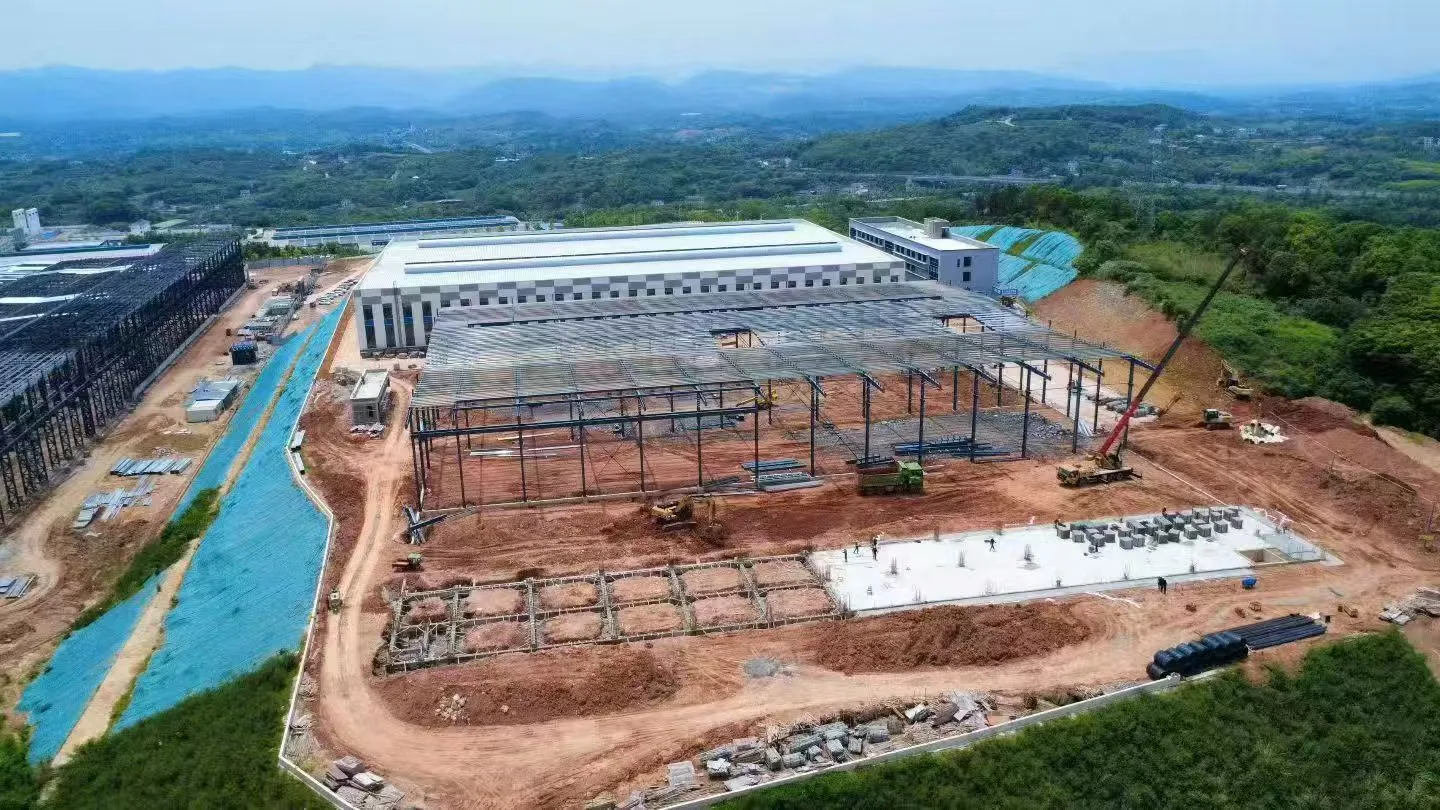
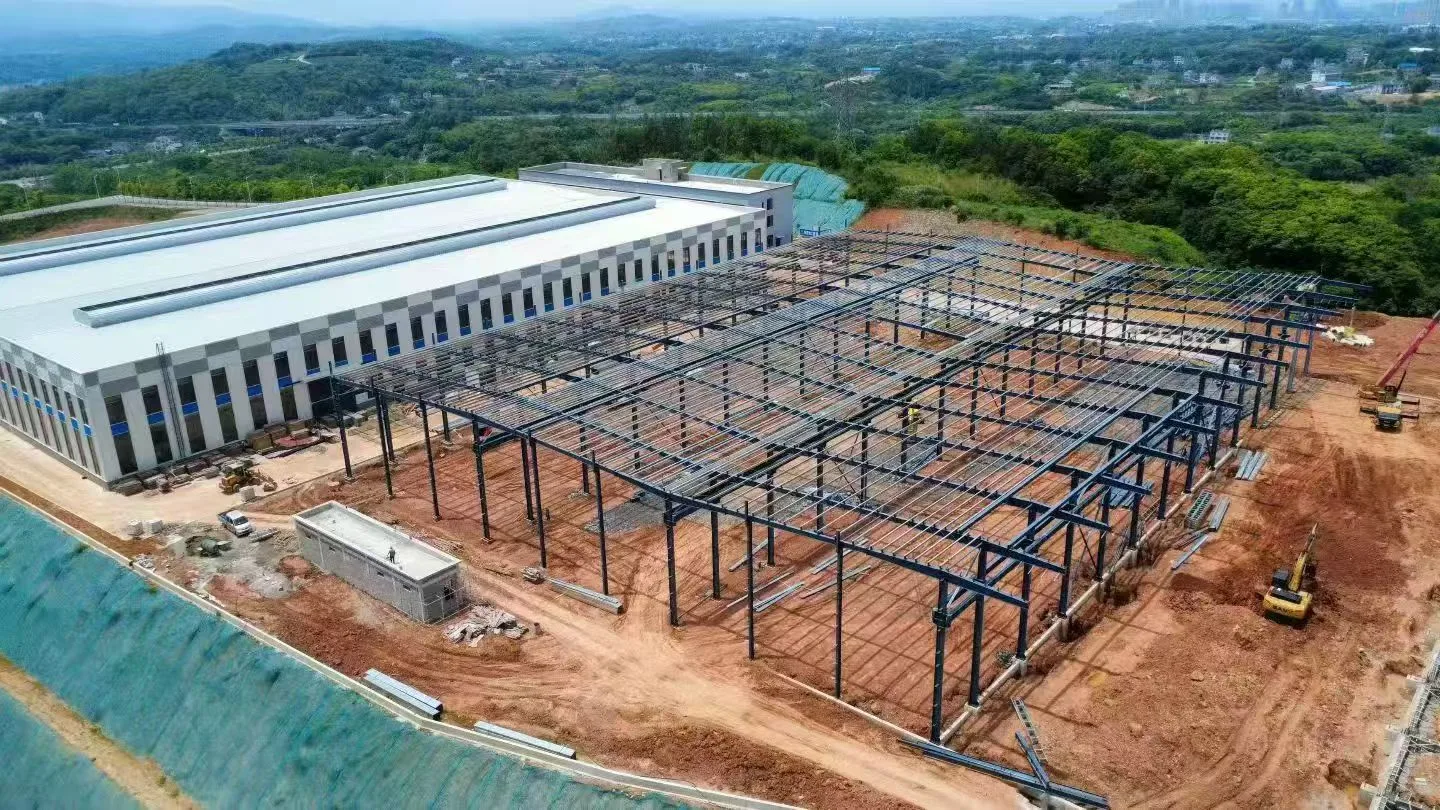
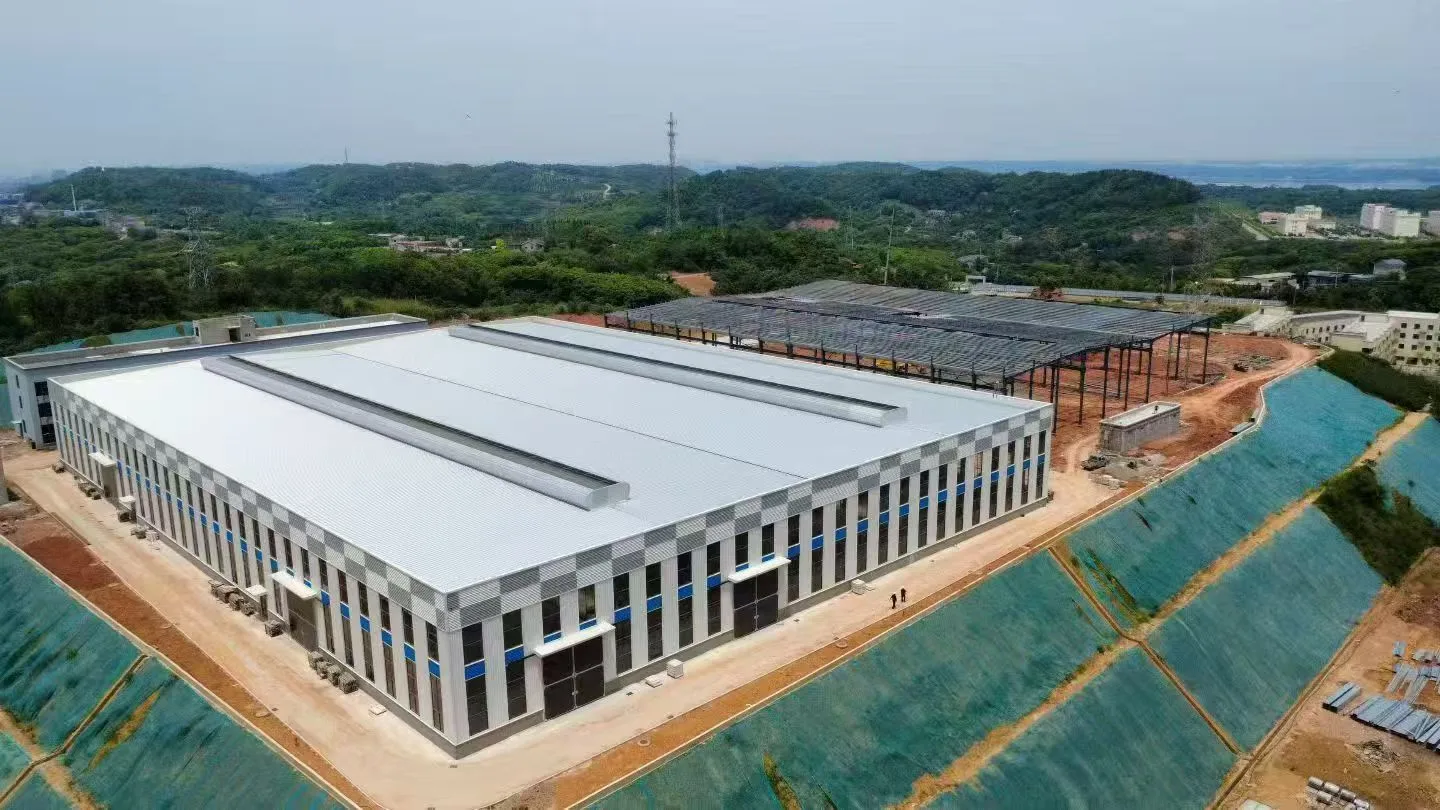
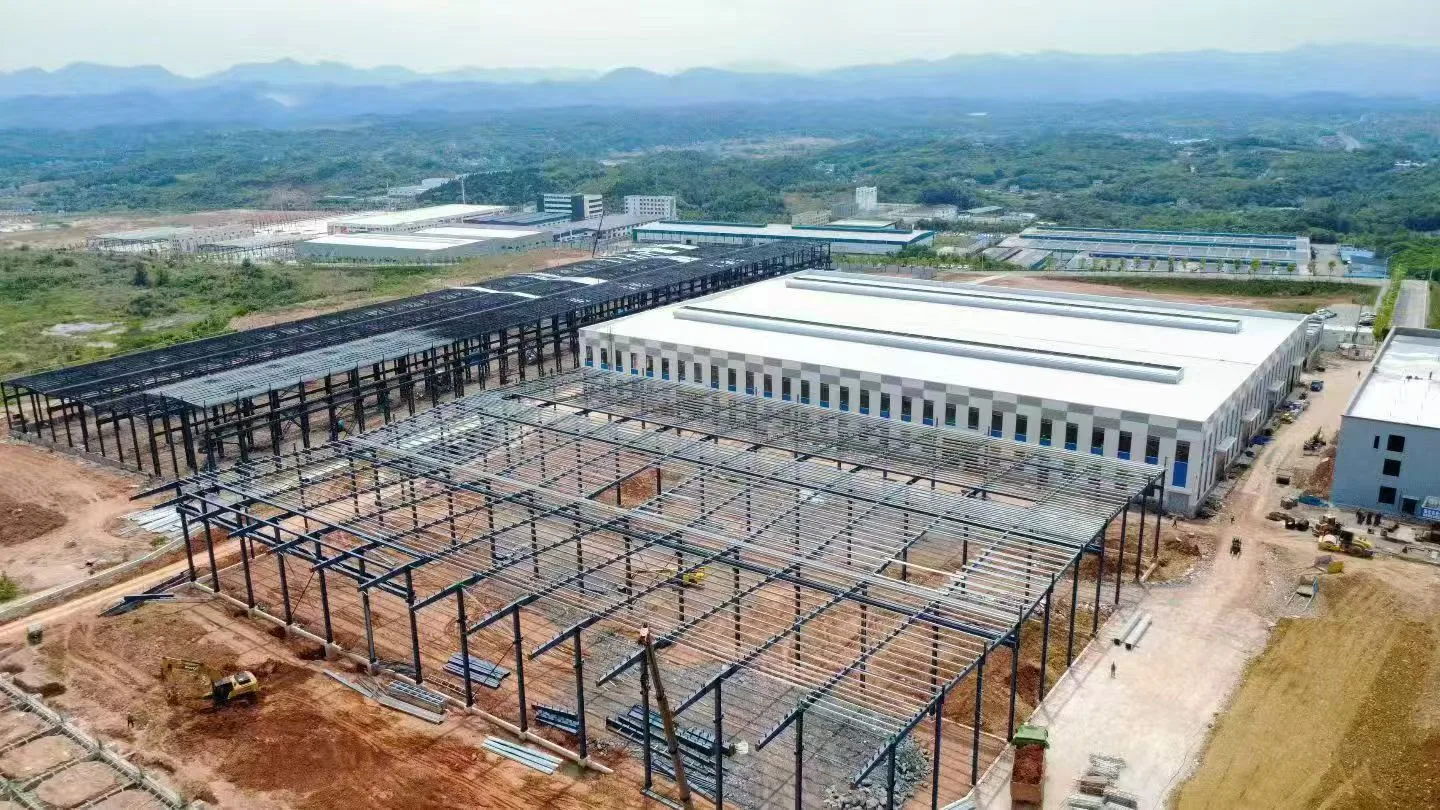
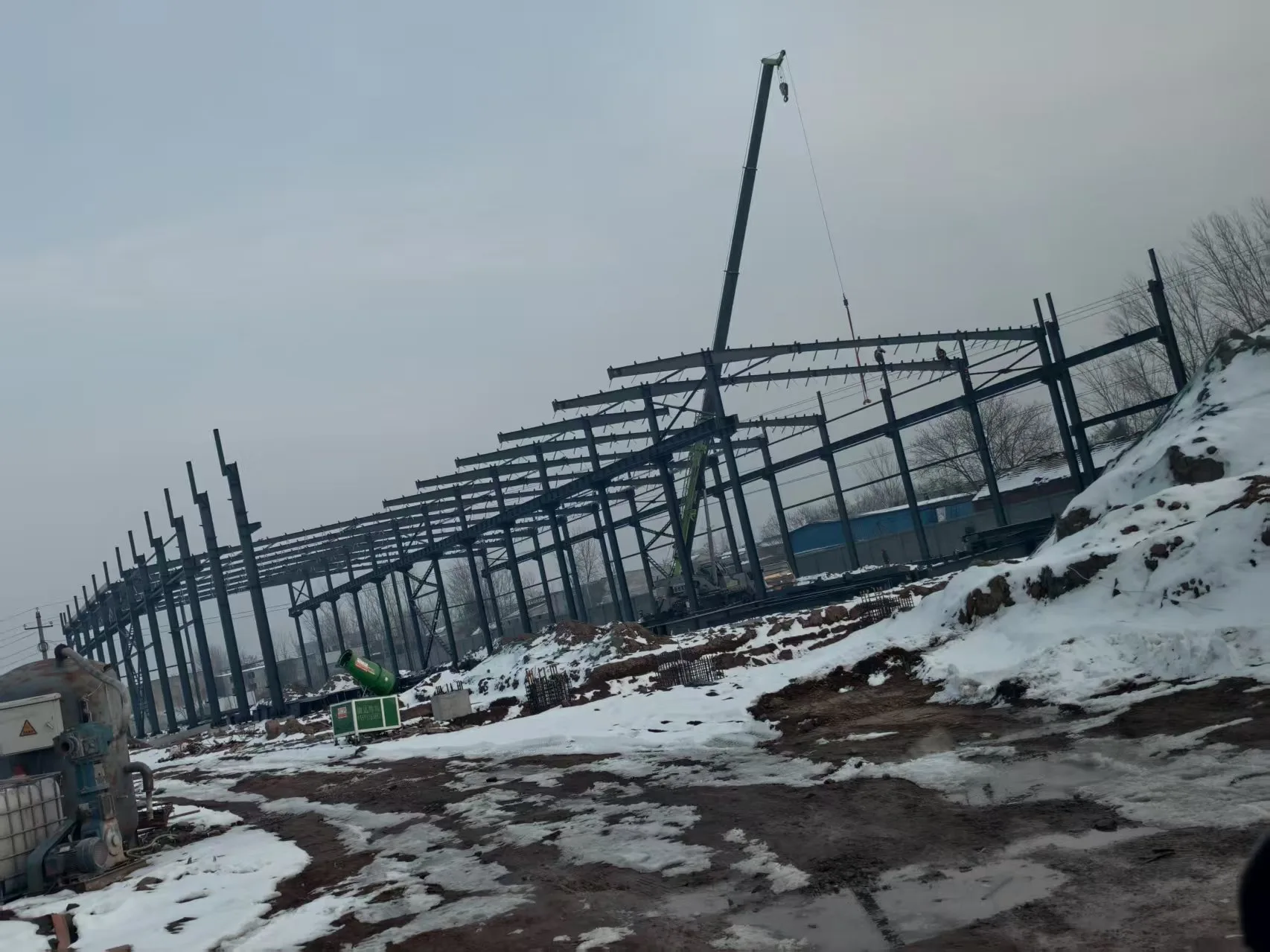
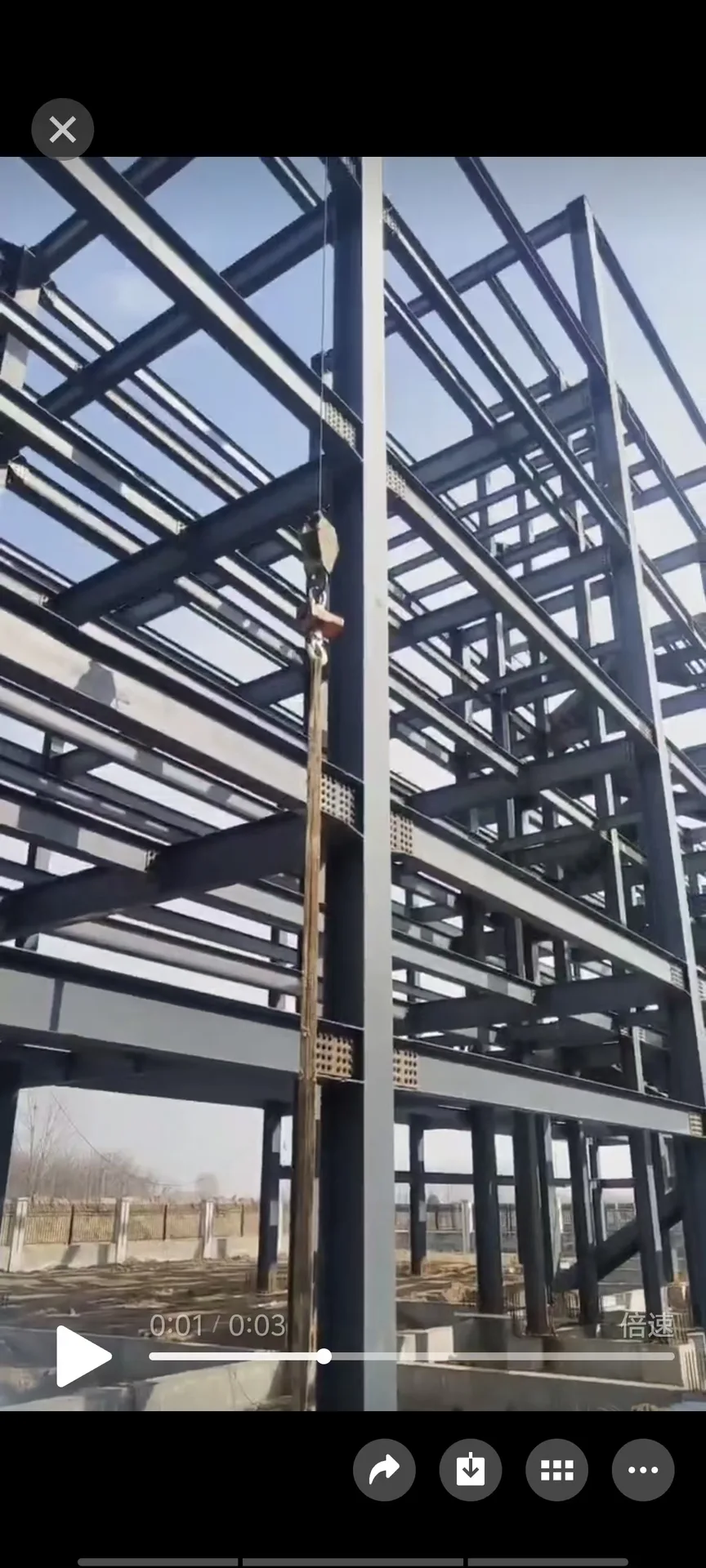
More project photos available upon request. Contact our team for the full project gallery including factory fabrication, container loading, and on-site erection photos.
Customer Feedback
"Laotie Steel delivered a high-quality structure that fully complies with Australian standards. The engineering team was responsive, the fabrication was precise, and the on-site erection went smoothly. We highly recommend them for any steel warehouse project in Australia."
David Mitchell
Project Manager, Perth Agricultural Processing Plant
Frequently Asked Questions
How much does a 15,000 sqm factory cost in Nigeria?▼
For a 15,000 m² factory complex like our Lagos project, the supply-only cost from Laotie Steel is typically $450-550 per m² (FOB Shanghai). Including Nigerian import duties (20%), port handling and customs clearance (approximately $80-120 per container), inland transport from Lagos port to site, and local erection ($60-90/m²), the total delivered-and-erected cost is approximately $650-800 per m². Local Nigerian fabrication would typically quote $800-1,000 per m² for equivalent specification.
Do your steel structures comply with Nigerian building codes?▼
Yes. Every Laotie steel structure for the Nigerian market is designed to relevant British Standards (adopted by Nigeria): BS 6399 (Loadings), BS 5950 (Structural Use of Steelwork), and BS 476 (Fire Safety). We provide full calculation reports that can be submitted to Nigerian building authorities. Our designs also comply with the Nigerian Building Code (NBC 2006) requirements.
What corrosion protection do you use for coastal Nigeria projects?▼
For coastal Nigeria (C4 high corrosivity per ISO 9223), we use a 420μm DFT epoxy-polyurethane coating system with zinc-rich primer (durability: 15 years per ISO 12944). All secondary members (purlins, girts) are hot-dip galvanized (85μm zinc coating). For roof cladding, we use galvanized steel with acrylic coating (15-year warranty). This system has proven performance in Lagos's coastal environment.
What is the lead time for a factory from China to Lagos?▼
Total lead time is typically 55-65 days: 25-30 days for fabrication, 24-28 days for sea freight to Lagos (Apapa or Tin Can port), plus 7-14 days for port clearance (Lagos ports are frequently congested). We recommend allowing 75 days total from deposit to site delivery. Using 20ft containers for heavy members can reduce port handling time by 3-5 days.
Can you help with Nigerian import documentation (Form M, PSI)?▼
Yes. We provide all export documentation required for Nigerian imports: Commercial Invoice, Packing List, Bill of Lading, Certificate of Origin, and Mill Test Reports. For Form M (import permit) and PSI (Pre-Shipment Inspection), we coordinate with the client's appointed clearing agent and provide any additional documentation required by Nigerian customs.
Do you provide natural ventilation design for tropical factories?▼
Yes. For this Lagos project, we designed 120 continuous ridge vents that provide 10 air changes per hour of natural ventilation. The vents use solar-powered automatic openers (activates at 28°C internal temperature). This provides ventilation without electricity costs — critical for regions with intermittent power supply. We can also design wall louvers and roof monitors for enhanced natural ventilation.
What foundation design do you provide for Nigerian soil conditions?▼
We provide foundation reaction reports that your local geotechnical engineer can use to design suitable foundations. For Lagos's typical sandy loam soil (100-150 kPa bearing capacity), our standard foundation design uses 1.8m × 1.8m × 1.2m deep reinforced concrete pads with M36 anchor bolts. We also provide hold-down bolt cage assemblies for accurate anchor bolt positioning.
What warranty do you provide for steel structure projects in West Africa?▼
Laotie Steel provides a 15-year structural warranty on all steel members and connections. Cladding systems carry a 10-15-year warranty (depending on coating type). Coating system warranty: 10 years against peeling, cracking, or excessive fading (subject to environmental conditions). All warranties are backed by our international insurance coverage for projects over $500,000.
Ready to Start Your Steel Warehouse Project?
Planning a factory complex in Nigeria or West Africa? Get a free preliminary design and budget estimate within 24 hours. Share your site dimensions, local building code requirements, tropical climate considerations, and intended use — our engineering team will prepare a customized proposal with British Standards-compliant calculations.
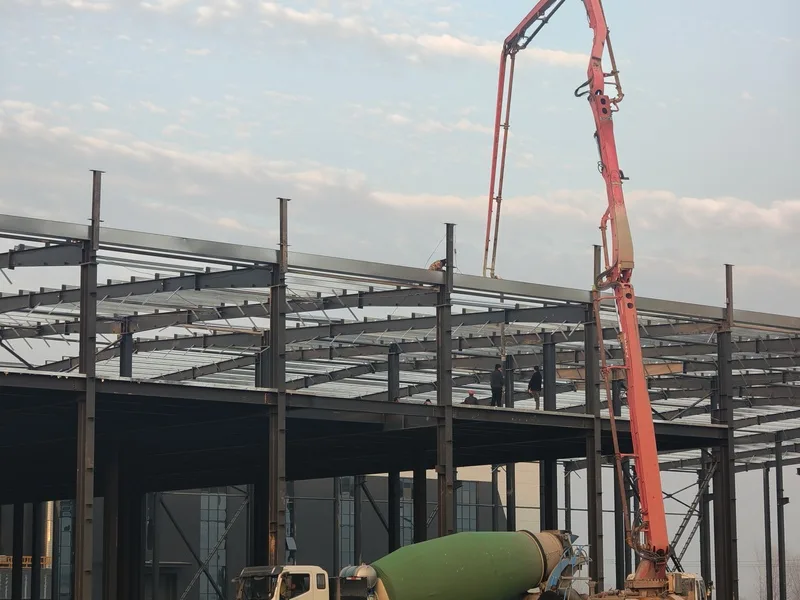
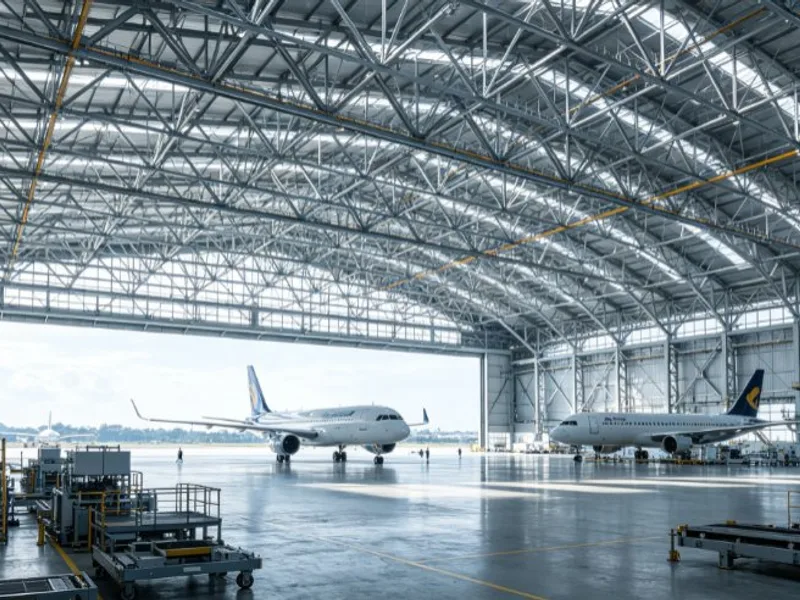
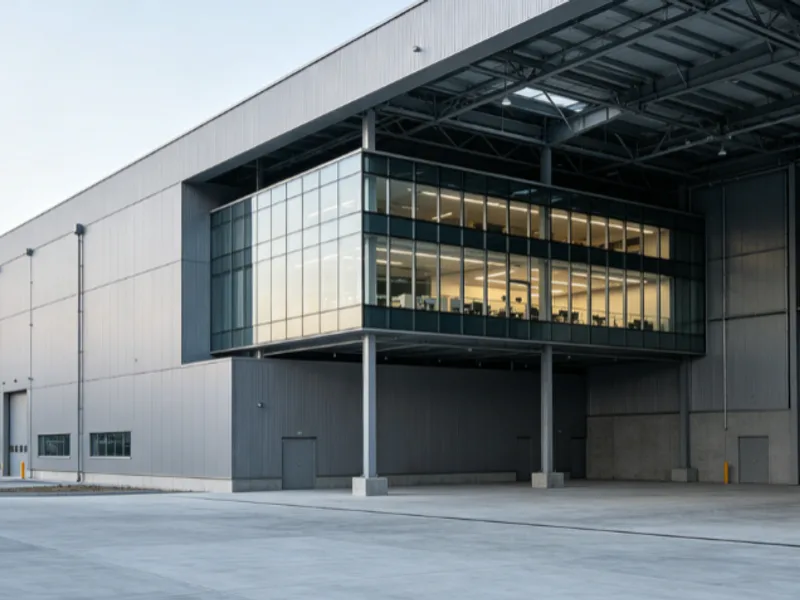
This Lagos factory complex demonstrates Laotie Steel's capability to deliver large-span, tropical-climate-optimized steel structure solutions to the West African market. From corrosion-resistant coating systems to natural ventilation design and Nigerian import documentation support, every stage of this project was managed to ensure the client received a durable, code-compliant structure at a competitive price.
Whether you are planning a 2,000 m² manufacturing plant or a 30,000 m² industrial complex, our 5 production lines and 15+ years of export experience ensure your project will be delivered on time, on budget, and fully compliant with your local building codes and tropical climate requirements.