Steel Structure Corrosion Protection: C1 to C5 Guide
Complete guide to steel structure corrosion protection. Learn ISO 12944 C1-C5 classification, coating system selection, galvanized vs painted vs duplex, and
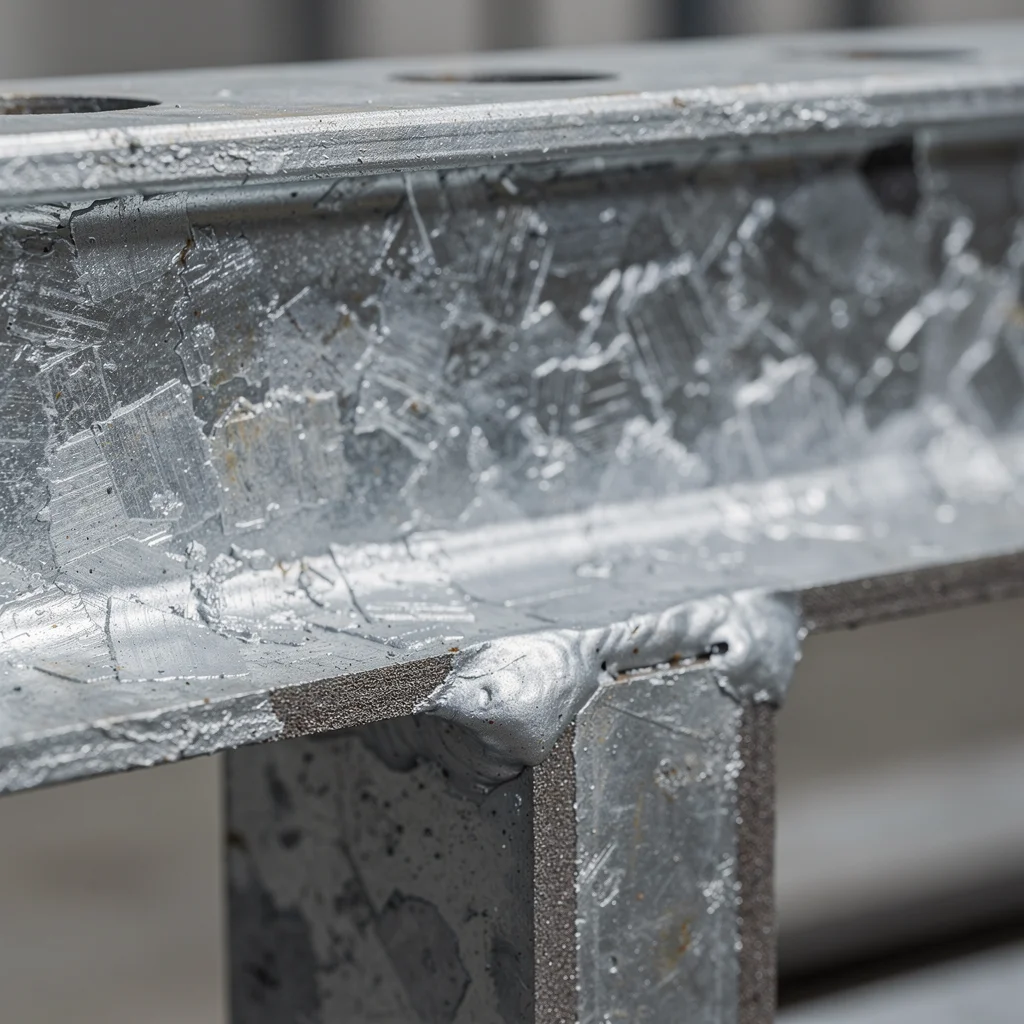
Why Corrosion Protection Is the Lifeline of Every Steel Structure
Steel is strong, fast to erect, and cost-efficient — but it has one mortal enemy: corrosion. According to NACE International, the global cost of corrosion exceeds USD 2.5 trillion per year, roughly 3.4% of global GDP. For steel structure owners, a poorly protected building can lose 30–50% of its design life within 15 years if exposed to an aggressive environment without adequate coating.
The good news? Corrosion is predictable and preventable. The international standard ISO 12944 gives engineers, fabricators, and owners a clear framework to classify atmospheric corrosivity from C1 (Very Low) to C5-Marine (Very High), and to specify coating systems that match each environment. This guide walks you through every category, coating option, thickness rule, and maintenance cycle so you can specify — or demand — the right protection for your project.

ISO 12944 Corrosivity Categories Explained
ISO 12944-2 defines six atmospheric corrosivity categories. Each describes the typical environment, representative examples, and the first-year mass loss of unprotected carbon steel.
| Category | Corrosivity | Typical Environment | Examples | Steel Mass Loss (µm/year) |
|---|---|---|---|---|
| C1 | Very Low | Heated buildings, clean atmospheres | Offices, schools, hotels | < 1.3 |
| C2 | Low | Unheated buildings, rural atmospheres | Warehouses, sports halls, rural barns | 1.3 – 25 |
| C3 | Medium | Urban & industrial, moderate SO2 | City centers, light industrial plants, coastal low-salt areas | 25 – 50 |
| C4 | High | Industrial & coastal, moderate salt | Chemical plants, coastal areas, swimming pools | 50 – 80 |
| C5-I | Very High (Industrial) | Aggressive industrial atmospheres | Heavy industry, acid plants, high humidity + pollutants | 80 – 200 |
| C5-M | Very High (Marine) | Coastal & offshore, high salt | Offshore platforms, port structures, beachfront buildings | 80 – 200 |
How to Determine Your Category
Most projects fall into C2–C4. Coastal structures within 1 km of the shoreline, or industrial sites with acid/alkali emissions, are typically C5-M or C5-I. When in doubt, perform on-site corrosivity testing or consult local meteorological and pollution data.
Coating Systems: Primer, Intermediate, and Finish
A durable anti-corrosion system is rarely a single coat. ISO 12944-5 recommends multi-layer systems combining:
- Primer — adhesion to steel and active corrosion inhibition (zinc-rich primers are the workhorse)
- Intermediate coat — barrier protection and film build (MIO, epoxy)
- Finish coat — UV resistance, color, gloss, and weathering (polyurethane, fluorocarbon)
Common Coating Chemistries
| Layer | Coating Type | Key Property | Typical DFT (µm) |
|---|---|---|---|
| Primer | Inorganic zinc-rich (IOZ) | Cathodic protection, high temp | 50–75 |
| Primer | Organic zinc-rich epoxy | Good adhesion, tolerant surface | 50–75 |
| Intermediate | Epoxy MIO (micaceous iron oxide) | Barrier, water resistance | 75–125 |
| Intermediate | High-build epoxy | Thick film, chemical resistance | 100–200 |
| Finish | Aliphatic polyurethane | UV stability, color retention | 40–60 |
| Finish | Fluorocarbon (PVDF) | 20+ year gloss retention | 30–40 |
Galvanized vs Painted vs Duplex Systems
There are three mainstream protection strategies. Each has a sweet spot in terms of environment, service life, and budget.
Hot-Dip Galvanizing (HDG)
A metallurgical zinc-iron alloy layer forms on the steel surface after immersion in molten zinc at ~450°C. HDG provides cathodic protection — even if scratched, the zinc sacrifices itself to protect the steel. Best for C1–C4 structures and small-to-medium components (beams, trusses, guardrails).
- Typical coating thickness: 70–120 µm (depending on steel thickness)
- Service life in C3: 40–60 years to first maintenance
- Limitation: difficult for very large or closed sections; uniform appearance only with gray matte
Painted Systems
Liquid coatings offer unlimited color, gloss control, and can be applied to any size on-site or in-shop. They are mandatory for C5 environments and architectural projects requiring branded colors.
- Typical total DFT: 150–350 µm depending on category
- Service life in C5-M (high-build epoxy + PU): 15–25 years first maintenance
- Limitation: relies on surface preparation; edge and weld defects reduce life
Duplex Systems (Galvanized + Painted)
Applying a paint system over hot-dip galvanizing creates a synergistic effect — the duplex life is typically 1.5–2.3× the sum of each system alone. Ideal for C5 environments, long-life infrastructure, and signature architecture.
- Typical total DFT: 70 µm zinc + 120–200 µm paint
- Service life in C5-M: 30–50 years to first major maintenance
- Critical: use a sweep-blast or weathering step to ensure paint adhesion to fresh zinc

Coating Thickness by ISO 12944 Category
The table below shows recommended dry film thickness (DFT) and durability ranges per ISO 12944-5 (updated 2018) for atmospheric exposure.
| Category | System Example | Total DFT (µm) | Durability Low | Durability Medium | Durability High |
|---|---|---|---|---|---|
| C2 | 1× zinc-rich primer + 1× alkyd | 80–120 | 7–10 yr | 15–20 yr | 25+ yr |
| C3 | 1× zinc epoxy + 1× epoxy + 1× PU | 160–200 | 7–10 yr | 15–20 yr | 25+ yr |
| C4 | 1× zinc-rich + 2× epoxy MIO + 1× PU | 240–280 | 7–10 yr | 15–20 yr | 25+ yr |
| C5-I | 1× zinc-rich + 2× high-build epoxy + 1× PU | 280–340 | 7–10 yr | 15–20 yr | 25+ yr |
| C5-M | HDG + sweep blast + 2× epoxy + 1× PU (duplex) | 70 + 220–280 | 10–15 yr | 20–25 yr | 30+ yr |
Surface Preparation: The Hidden 70% of Coating Life
Even the best coating fails on a poorly prepared substrate. Surface preparation accounts for up to 70% of coating performance.
- Abrasive blasting to Sa 2.5 (near-white metal) is the baseline for zinc-rich primers and C4–C5 systems
- Sa 3 (white metal) is required for offshore and immersion service
- Surface profile (roughness) of 50–85 µm is needed for optimal mechanical adhesion
- Soluble salt contamination on the surface must be below 50 mg/m² (chloride) before coating
Maintenance and Re-Coating Cycle
A well-designed maintenance plan extends structure life indefinitely. The recommended inspection and re-coating interval by category:
| Category | First Inspection | Re-coating Interval | Typical Action |
|---|---|---|---|
| C1–C2 | 10 years | 20–25 years | Spot repair + finish coat |
| C3 | 5–7 years | 12–15 years | Spot primer + 1 full coat |
| C4 | 3–5 years | 8–12 years | Spot primer + intermediate + finish |
| C5-I | 2–3 years | 6–8 years | Full re-coat or duplex upgrade |
| C5-M | 1–2 years | 5–7 years | Full re-coat, consider cathodic protection |
Cost Comparison: Which System Makes Economic Sense?
Initial cost is only one part of the equation. Life-cycle cost (LCC) over 30 years often tells a very different story.
| System | Initial Cost (USD/m²) | 30-Year Maintenance Cost (USD/m²) | Total LCC (USD/m²) |
|---|---|---|---|
| Alkyd paint (C2) | 6–9 | 8–12 | 14–21 |
| Epoxy + PU (C3) | 12–18 | 15–22 | 27–40 |
| High-build epoxy + PU (C4) | 18–25 | 20–28 | 38–53 |
| Hot-dip galvanized (C3) | 15–22 | 3–6 | 18–28 |
| Duplex system (C5-M) | 28–38 | 12–18 | 40–56 |
| C5-I full epoxy system | 25–35 | 25–35 | 50–70 |

Fire Protection and Coating Compatibility
If your structure also requires fireproofing — intumescent coatings or boards — the corrosion protection primer must be chemically compatible with the fire protection system. Always verify the system approval (e.g., UL, ETA) covers the combined primer + fire coating stack.
Learn more in our dedicated guide: Steel Structure Fire Protection: Requirements, Materials, and Costs.
Practical Specification Checklist
Before signing off your coating specification, confirm:
- Environment category (C1–C5) is justified by site data or testing
- Surface preparation standard (Sa 2.5 minimum for C3+)
- Coating system reference from ISO 12944-5 or equivalent
- Total DFT and per-coat DFT range
- Reference area for adhesion and holiday testing
- Maintenance interval written into the O&M manual
- Compatibility with fire protection, if applicable
FAQ
Q1: What is the difference between C5-I and C5-M? C5-I refers to very high corrosivity in industrial atmospheres (acid gases, chemical pollutants), while C5-M refers to marine atmospheres with high chloride salt content. Both have similar mass loss ranges (80–200 µm/year) but require different coating chemistries — C5-M systems must have superior chloride resistance and often use duplex systems.
Q2: Can I use a C3 coating system in a C4 environment to save cost? Not recommended. A C3 system in a C4 environment will reach first major maintenance in as little as 4–6 years instead of 15, and the resulting repair cost will far exceed the initial saving. Always specify at or above the actual site category.
Q3: How long does hot-dip galvanizing last in a coastal environment? In a C5-M coastal environment, bare galvanizing typically lasts 15–25 years to first maintenance depending on zinc thickness. For longer life, upgrade to a duplex system that can extend service to 30–50 years.
Q4: Is it possible to overcoat weathered galvanizing? Yes. Sweep-blast the surface lightly (max 0.3 MPa pressure), remove all zinc corrosion products and contaminants, apply a compatible adhesion-promoting primer (often a wash primer or special epoxy), then proceed with the paint system. This is the standard duplex retrofit procedure.
Q5: How do I verify coating thickness on site? Use a calibrated magnetic DFT gauge following ISO 19840. Take readings at multiple spots per square meter (typically 5 per 10 m²), record the average and minimum, and confirm that 80% of readings are at or above the specified nominal DFT, with no single reading below 80% of nominal.
Next Steps
Corrosion protection is not a checkbox — it is the single biggest determinant of whether your steel structure will still be standing and looking good in 30 years. Specify to ISO 12944, insist on certified coating applicators, and build a maintenance plan from day one.
If you need a fabrication partner who delivers ISO 12944-compliant coating systems with full DFT reports, adhesion tests, and salt-contamination certificates, our engineering team is ready to help.
Contact our corrosion protection specialists today to get a tailored coating specification and quote for your project.
Related Articles
Steel Structure Engineering: Design to Construction Workflow
Complete guide to steel structure engineering workflow. Learn each phase from design analysis and connection detailing to fabrication, shipping, and on-site
Crane Beam Design Guide: Steel Structure Loads, Span & Cost
Complete guide to crane beam design for steel structures. Learn overhead crane types, wheel load calculation, span design, connection details, and cost factors.
Need a Steel Structure?
Get a free quote from our engineering team. We respond within 2 hours.
Request a QuoteStay Updated
Get steel structure tips, cost guides, and industry insights delivered to your inbox.
No spam. Unsubscribe anytime.