Steel Structure Maintenance: Extend Lifespan to 50+ Years
Learn to maintain steel structures for max lifespan. Annual inspection checklists, corrosion prevention, coating repair, and maintenance schedules for
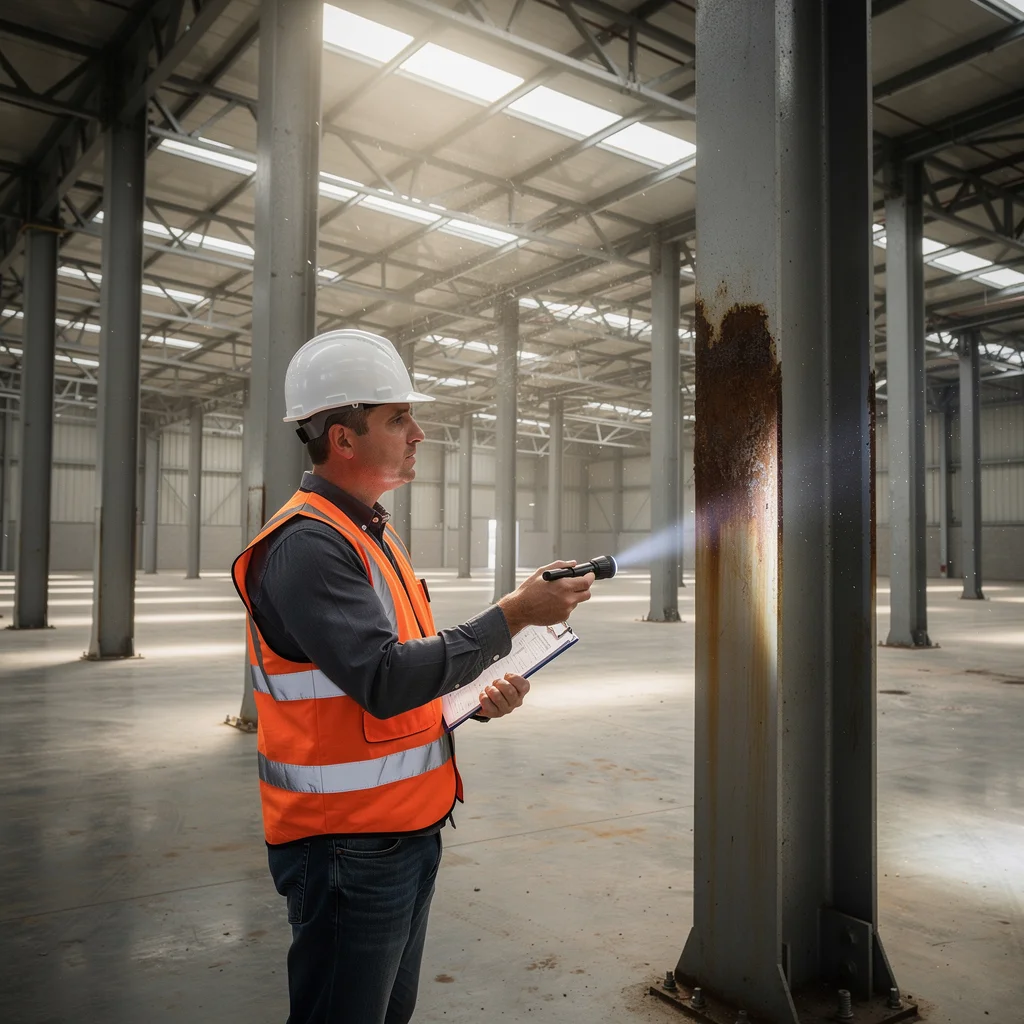
A well-designed steel structure should last 50 years or more — but only with proper maintenance. Unlike concrete or timber buildings, steel structures have predictable deterioration patterns. When you know what to watch for and when to act, maintenance becomes a manageable annual routine rather than an emergency response.
This guide covers everything building owners and facility managers need to maintain their steel structures — from routine inspections to major coating renewal.
How Long Does a Steel Structure Actually Last?
The design life of a steel structure depends on three factors:
| Factor | Impact on Lifespan |
|---|---|
| Coating system | Single largest determinant — quality coating = decades of protection |
| Environment | Coastal > industrial > rural (corrosivity categories C1 to C5 per ISO 9223) |
| Maintenance frequency | Annual inspection + prompt repair can add 10-20 years |
| Environment | Painted (standard) | Painted (epoxy system) | Hot-dip galvanized |
|---|---|---|---|
| Rural / inland (C1-C2) | 15-25 years | 30-40 years | 50+ years |
| Urban / light industrial (C3) | 10-20 years | 25-35 years | 40-50 years |
| Coastal / heavy industrial (C4-C5) | 5-10 years | 15-25 years | 25-35 years |
Annual Inspection: Your First Line of Defense
The single most impactful maintenance activity is a thorough annual inspection. Here's a structured checklist.
Structural Frame Inspection
What to check on columns, rafters, and beams:
- Visual sweep: Walk the entire perimeter. Look for rust spots, paint blistering, or flaking — especially at connection points and base plates
- Column verticality: Check with plumb bob or laser level. Deviation should not exceed H/500 (2mm per meter of height)
- Beam deflection: Measure at mid-span. Compare against original design values. Excessive deflection signals overload or section weakening
- Connection bolts: Check for looseness with torque wrench (5% random sample). Missing bolts are a red flag — replace immediately
- Base plate condition: Look for water pooling around column bases. Standing water accelerates corrosion dramatically
Roof System Inspection
- Roof cladding: Check for displaced sheets, missing screws, or torn panels
- Gutters and downpipes: Clear debris. Blocked drainage causes water overflow onto wall cladding
- Roof bracing: Verify all tension rods are taut. Loose bracing compromises the entire roof diaphragm
- Skylight seals: Check for cracks or gaps in sealant around skylight panels
- Ridge and eave flashings: Ensure all flashings are secure and sealed
Corrosion Assessment
Rate corrosion severity on each structural member:
| Grade | Description | Action Required |
|---|---|---|
| Ri 0 | No visible corrosion | None — continue monitoring |
| Ri 1 | Minor surface rust spots (<1% of area) | Clean and touch-up paint within 6 months |
| Ri 2 | Moderate rust (1-10% of area) | Power-tool clean and repaint within 3 months |
| Ri 3 | Heavy rust, paint failure (10-33%) | Abrasive blast clean and full repaint |
| Ri 4 | Severe corrosion, section loss | Structural assessment required — possible member replacement |
Preventive Maintenance Schedule
Monthly (Facility Manager)
- Visual walk-around — any new rust spots, damage, or water ingress?
- Clear obvious debris from gutters and roof valleys
- Check that all doors and windows operate correctly
Quarterly
- Inspect all roof penetrations (vents, flues, skylights) — reseal if needed
- Lubricate roller door tracks and hinges
- Check tension in bracing rods
Annually (Professional Inspection)
- Complete structural inspection using the checklist above
- Coating thickness measurement on 10 representative points
- Bolt torque audit (5% random sample)
- Document findings with dated photos — build a maintenance history
Every 5-7 Years
- Full coating condition assessment by a coatings inspector
- Plan for recoating if dry film thickness has decreased by 30%+ from original
- Structural member thickness measurement if corrosion is suspected
Every 15-20 Years
- Major coating renewal — abrasive blast to SA 2.0 minimum, full repaint system
- Replace all sealants (panel laps, flashings, penetrations)
- Replace any fasteners showing corrosion
Common Maintenance Issues and Solutions
Rust at Column Base Plates
Cause: Water pooling at the base, capillary action drawing moisture up.
Fix: Chip away loose grout → clean steel to bare metal → apply zinc-rich epoxy primer → re-grout with non-shrink material → ensure proper drainage slope.
Roof Leaks at Screw Fasteners
Cause: Neoprene washers degrade under UV exposure.
Fix: Remove failed screws one at a time → clean hole → install new screw with EPDM washer (superior UV resistance) → apply neutral-cure silicone over screw head.
Peeling or Blistering Paint
Cause: Moisture trapped under coating or coating reaching end of service life.
Fix: Scrape loose paint → power-tool clean to St 3 standard → apply compatible primer within 4 hours → apply matching top coats.
Loose or Missing Bolts
Cause: Vibration, thermal cycling, or improper initial torque.
Fix: Replace (never re-tighten) loose high-strength bolts. Check adjacent bolts. Investigate root cause if bolt loss exceeds 2%.
Cost of Maintenance vs Cost of Neglect
| Maintenance Approach | 30-Year Cost (% of building value) | Building Condition at Year 30 |
|---|---|---|
| Proactive (annual + prompt repair) | 3-5% | Excellent — near-original condition |
| Reactive (fix only when visible) | 8-15% | Fair — accumulated damage |
| Neglect (no maintenance) | 20-40% or replacement | Poor to unsafe — structural deterioration |
When to Call a Structural Engineer
- Beam deflection exceeding L/200
- Visible section loss on any primary structural member
- Foundation settlement or cracking around column bases
- After major events: earthquakes, cyclones, vehicle impacts, fires
- Before changing building use (adding crane, heavier loads)
Laotie's Commitment to Building Longevity
Every Laotie steel structure ships with:
- Complete as-built documentation — design parameters, material certificates, coating specs
- Maintenance manual tailored to your coating system and environment
- Touch-up paint kit — 2 liters of matching primer and topcoat
- Spare fasteners — 2% extra bolts, screws, and washers
Start With a Structure Built to Last
The best maintenance program starts with a well-built structure. Our factory in Shangqiu, Henan produces steel buildings engineered for your local conditions — correct steel grade, wind/snow/seismic design, and coating system matched to your environment.
📱 WhatsApp: +86 166-5073-5555 🌐 Website: https://www.laotie-steel.com
Related Articles
How to Estimate Structural Steel: A Step-by-Step Guide for 2026
How to estimate structural steel in 6 steps: calculate floor area, apply tonnage factors, convert price to cost per m2, add fabrication, shipping and erection.
Steel Warehouse Quotation: 10 Questions to Ask
10 questions every buyer must ask before ordering a steel warehouse. Compare quotes apple-to-apple: steel grade, tonnage, surface treatment, inclusions
Need a Steel Structure?
Get a free quote from our engineering team. We respond within 2 hours.
Request a QuoteStay Updated
Get steel structure tips, cost guides, and industry insights delivered to your inbox.
No spam. Unsubscribe anytime.