7 Mistakes When Importing Steel Structures from China
Learn from real importers' costly errors: vague specs, skipping inspection, ignoring corrosion protection and 4 more mistakes that cause delays and budget
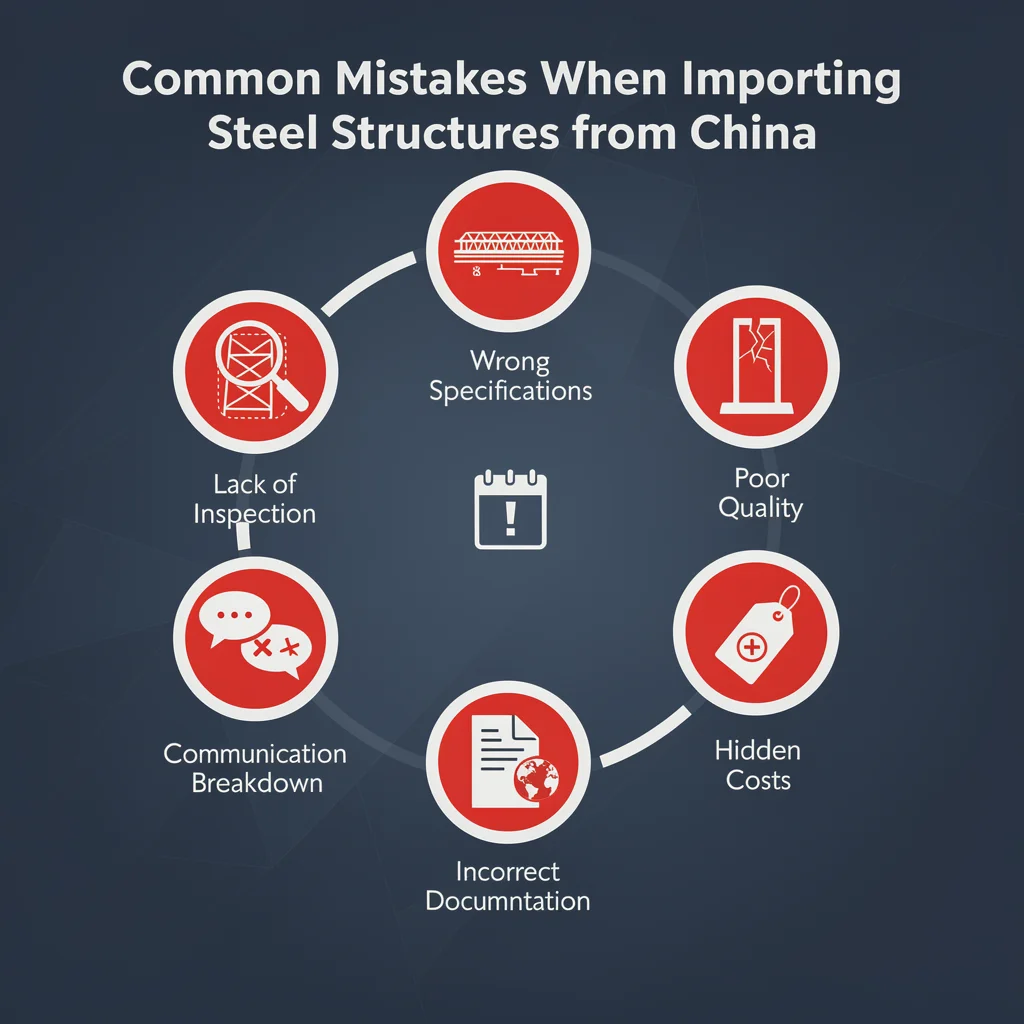
Every year, international buyers lose millions of dollars importing steel structures from China — not because the steel is bad, but because of preventable mistakes in specification, communication, and quality control.
Based on real cases from 15 years of exports to 30+ countries, here are the 7 most common mistakes and how to avoid them.
Mistake #1: Vague Specifications
The problem: Sending a short description like "I need a steel warehouse 30m wide, 50m long" and expecting a turnkey solution.
Without detailed specifications, the manufacturer fills in the gaps with their default assumptions — which may not match your local building code, wind loads, or intended use.
A real case: A buyer in Kenya ordered a "60m × 30m warehouse" for grain storage. The manufacturer used a standard roof pitch of 10 degrees with no insulation requirement. After delivery, the buyer discovered the structure couldn't support the required grain conveyor system and had severe condensation problems. Retrofit cost: $45,000.
How to avoid it:
| Provide This | Why It Matters |
|---|---|
| Clear dimensions (width × length × eave height) | Defines the building envelope |
| Design code (AISC, Eurocode, GB, AS/NZS) | Determines safety factors |
| Wind speed and snow load at your site | Critical for structural sizing |
| Seismic zone | Reinforces connections in earthquake areas |
| Crane requirements (capacity and height) | Affects column design significantly |
| Cladding and insulation details | Affects dead load calculations |
| Intended use (warehouse, factory, cold storage) | Determines live loads and environmental requirements |
Mistake #2: Skipping Factory Inspection
The problem: Trusting photos and promises without verifying fabrication quality.
Chinese manufacturers range from world-class export factories to small local workshops. Without an inspection, you cannot be certain of:
- Actual production capacity and workload
- Weld quality and NDT procedures
- Paint thickness and surface preparation
- Compliance with your specified standards
How to avoid it:
- Request regular photo/video updates — Weekly progress photos showing key stages
- Hire third-party inspection — SGS, Bureau Veritas, or TUV can inspect during fabrication
- Consider a pre-shipment visit — For projects over $100,000, visit the factory or send a representative
- Video call inspection — If travel is impossible, request a live video walkthrough
Mistake #3: Ignoring Corrosion Protection
The problem: Assuming the standard paint system is adequate for your environment.
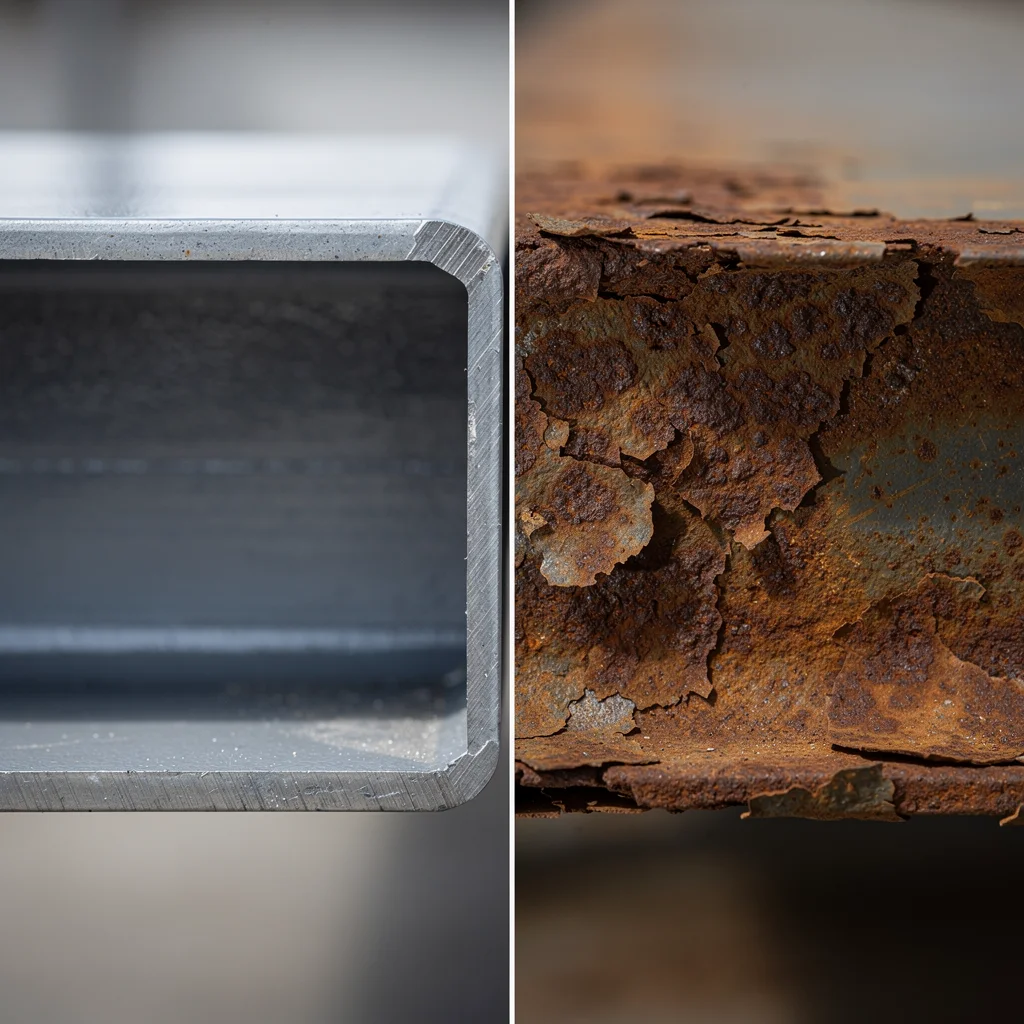
China has relatively low air pollution in many manufacturing zones. A paint system designed for central China will fail within 6 months in a coastal environment like Lagos, Manila, or Jakarta.
Standard vs marine-grade protection:
| Environment | Corrosivity Category | Recommended Coating | Expected Lifespan |
|---|---|---|---|
| Dry inland (savanna, desert) | C2 | Standard primer (80μm) | 10-15 years |
| Urban/industrial | C3 | Epoxy primer + polyurethane top coat | 8-12 years |
| Coastal (within 5km of shore) | C4 | Zinc-rich epoxy + intermediate + top coat | 5-8 years |
| Marine/industrial coastal | C5 | Hot-dip galvanizing or specialized coating system | 10-15 years |
- Surface preparation standard (ISO 8501-1 SA 2.5)
- Primer type and dry film thickness (DFT)
- Number of coats and total DFT
- Requirements for touch-up after installation
Mistake #4: Poor Payment Structure
The problem: Accepting unfavorable payment terms that leave you with no leverage.
Paying too much upfront transfers all risk to the buyer. Paying too little upfront may mean the manufacturer prioritizes other orders over yours.
| Scenario | Risk |
|---|---|
| 100% payment in advance | Maximum — no leverage if quality or delivery are poor |
| 50% deposit / 50% before shipment | Moderate — can withhold final payment |
| 30% / 40% / 30% (milestone-based) | Low — payment tied to progress |
| 30% deposit / 70% against BL copy | Low — document-based payment via LC |
- Never pay 100% upfront
- Use milestone-based payments (deposit → material ready → fabrication complete → before shipment)
- For large projects (over $200,000), consider an LC (Letter of Credit)
- Retain 5-10% against shipping documents or installation completion
Mistake #5: Overlooking Documentation
The problem: Assuming one set of documents covers everything.
International steel structure projects require multiple documents for customs clearance, building permits, and quality verification.
Essential documentation checklist:
| Document | Purpose | Must Include |
|---|---|---|
| Mill certificates | Proves steel grade and properties | Heat number, chemical composition, mechanical test results |
| Weld maps and NDT reports | Verifies weld quality | Weld locations, inspection methods, results |
| Erection drawings | Shows how to assemble on site | Member marks, bolt specifications, torque values |
| Packing list | Container contents | Item numbers, quantities, weights, dimensions |
| Certificate of Origin | Customs clearance | Chamber of Commerce stamp |
| Bill of Lading | Proof of ownership | Container number, seal number, port of loading |
Mistake #6: Underestimating Logistics Time and Cost
The problem: Planning a construction crew to arrive the week the container lands.
As shown in the shipping timeline earlier, total lead time from order to site is 5-10 weeks. Many buyers forget to account for:
- Engineering time (1-3 weeks)
- Container availability and booking time
- Port congestion at destination
- Customs clearance delays
- Inland transport scheduling
- Add 2 weeks buffer to the manufacturer's delivery estimate
- Confirm shipping frequency with your freight forwarder before ordering
- Order steel structures before your foundation is complete (parallel working)
- Request real-time tracking from the manufacturer
Mistake #7: Communication Gaps
The problem: Relying on email-only communication with no technical drawings review.
Without face-to-face (or video) communication, assumptions multiply on both sides. A "standard warehouse" to a Chinese fabricator may differ completely from what you expect.
How to avoid it:
- Initial call: Video call to discuss project requirements and expectations
- Design review: Review general arrangement drawings before fabrication starts
- Weekly updates: Agree on a communication schedule (email + WhatsApp)
- Single point of contact: Work with one project manager on the manufacturer's side
- Language: Confirm that your contact speaks English at a technical level (many Chinese factories have dedicated export staff)
Summary: Pre-Purchase Checklist
Before you sign a contract, verify each of these items:
- [ ] Detailed specification document signed by both parties
- [ ] Design code and load requirements specified
- [ ] Coating system for your environment specified
- [ ] Payment schedule with clear milestones
- [ ] Inspection plan (third-party or factory visit)
- [ ] Document package list agreed
- [ ] Shipping timeline with 2-week buffer
- [ ] Communication plan with single point of contact
- [ ] After-sales support commitment
Frequently Asked Questions
Q: How do I know if a Chinese manufacturer is trustworthy? A: Check third-party certifications, request client references, and consider a factory inspection visit. See our 10-point checklist guide for a detailed evaluation system.
Q: What is the most cost-effective way to import a steel structure? A: Provide complete specifications, order during off-peak shipping seasons, and consolidate multiple structures into one shipment.
Q: Can I modify the design after fabrication starts? A: Technically yes, but changes during fabrication cause delays and additional costs. Finalize all details before production begins.
Q: How long does a typical steel structure last? A: With proper maintenance and a suitable coating system, 30-50 years. The design life is typically 50 years for most codes.
Conclusion
The most successful international buyers treat steel structure procurement as a partnership, not a transaction. By investing time upfront in specifications, communication, and quality control, you avoid the costly mistakes that plague reactive buyers.
Ready to import your steel structure the right way? Contact Laotie Steel for a comprehensive quotation and project plan. We'll walk through this entire checklist with you before you commit.
*Laotie Steel Structure Co., Ltd. — 15 years of export experience to 30+ countries. CE & ISO 9001 certified. 5,000 tons/month capacity. Your trusted partner in steel structure manufacturing.*
Related Articles
Steel Warehouse Quotation: 10 Questions to Ask
10 questions every buyer must ask before ordering a steel warehouse. Compare quotes apple-to-apple: steel grade, tonnage, surface treatment, inclusions
Why Choose a Chinese Steel Structure Manufacturer
Discover why global buyers are turning to Chinese steel structure factories for their construction projects — from competitive pricing to CE/ISO certified
Need a Steel Structure?
Get a free quote from our engineering team. We respond within 2 hours.
Request a QuoteStay Updated
Get steel structure tips, cost guides, and industry insights delivered to your inbox.
No spam. Unsubscribe anytime.