Steel Structure CNC Cutting, Welding & Treatment Guide
Master steel structure processing: CNC plasma cutting, submerged arc welding, shot blasting, and surface treatment. How Chinese factories achieve precision
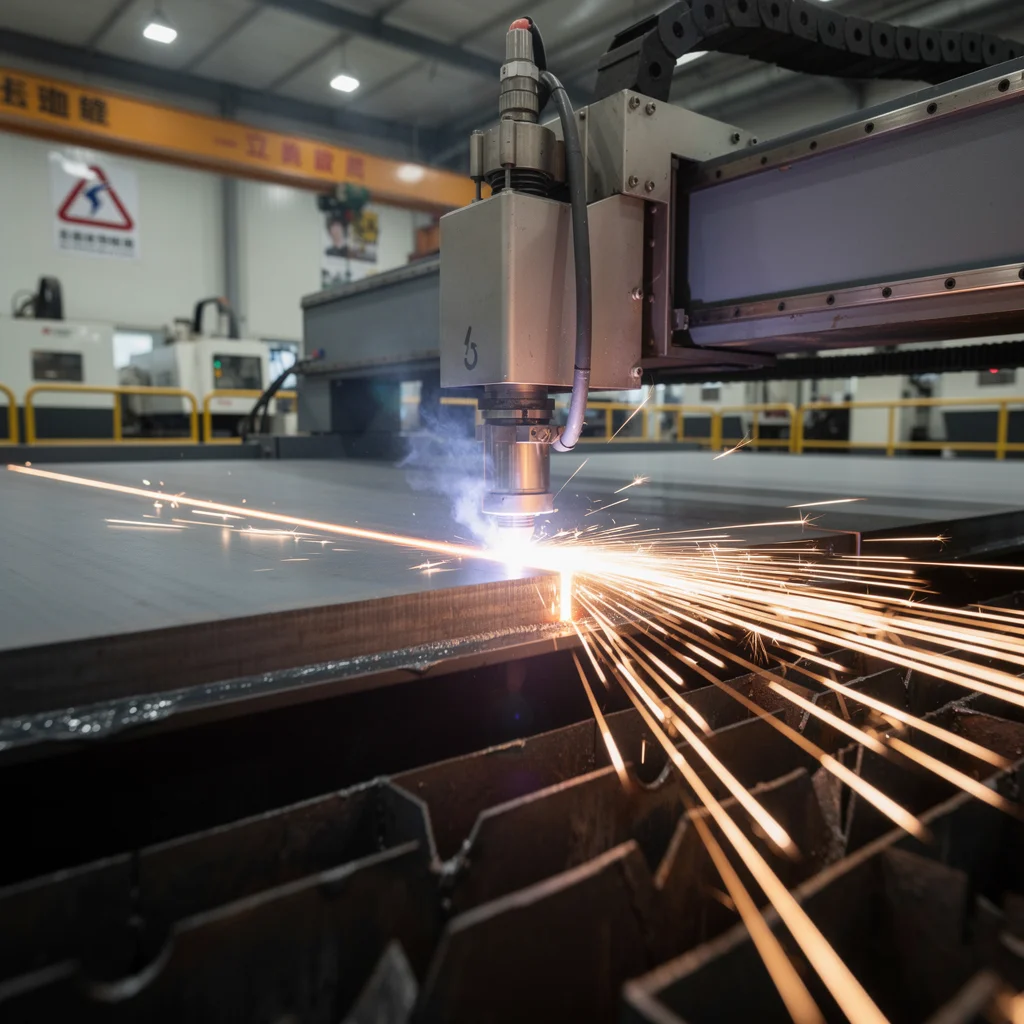
Steel structure processing is where engineering meets craftsmanship. Raw steel plates and sections are transformed into precision building components through a sequence of controlled industrial processes.
At Laotie Steel Structure, our Shangqiu factory processes over 5,000 tons of steel monthly across five production lines. Here's a detailed look at the core processing techniques.
CNC Cutting: The Foundation of Precision Fabrication
Modern steel fabrication begins with computer-controlled cutting. CNC technology ensures every component matches the shop drawing within millimeter tolerances.
Plasma Cutting
CNC plasma cutting is the workhorse of steel structure processing:
- Cutting thickness: 3mm to 50mm steel plate (up to 80mm for heavy-duty)
- Accuracy: ±0.5mm for plates up to 25mm thickness
- Speed: 500-3,500 mm/min depending on material
- Best for: Regular structural plates, gusset plates, base plates, stiffeners
Laser Cutting
For complex profiles and tight tolerances:
- Cutting thickness: 0.5mm to 25mm (fiber laser)
- Accuracy: ±0.1mm — unmatched by any thermal cutting method
- Edge quality: Minimal heat-affected zone, near-machined finish
- Best for: Connection plates with tight bolt patterns, architectural details
Flame Cutting (Oxy-Fuel)
For heavy steel plates beyond plasma capability:
- Cutting thickness: 25mm to 300mm
- Accuracy: ±1.5mm
- Best for: Column base plates, thick flange plates, crane runway beams
Quality Control at Cutting Stage
| Check | Tolerance | Method |
|---|---|---|
| Overall dimensions | ±1mm (critical), ±2mm (general) | Steel tape + caliper |
| Edge squareness | 90° ± 0.5° | Try square |
| Hole position | ±0.5mm | Go/no-go gauge |
| Surface roughness | Ra ≤ 25μm | Visual comparator |
Welding Methods: The Backbone of Structural Integrity
Submerged Arc Welding (SAW)
The preferred method for H-beam longitudinal seams:
- Arc burns beneath a blanket of granular flux — no visible arc, no spatter
- Deep, consistent fusion into the root of the joint
- 3-5× faster than manual welding for beam fabrication
CO₂ Gas Shielded Welding (GMAW)
All-position welding for connections and stiffeners:
- Continuous wire electrode with CO₂ or Ar/CO₂ shielding gas
- Applications: column-to-base-plate, stiffener plates, purlin cleats, bracing
Welding Quality Control
| Test Method | What It Detects | Coverage Rate |
|---|---|---|
| Visual Testing (VT) | Surface defects, weld profile | 100% of all welds |
| Ultrasonic Testing (UT) | Internal porosity, cracks | 10-20% of critical welds |
| Magnetic Particle (MT) | Surface and near-surface cracks | Supplementary to UT |
| Radiographic Testing (RT) | Internal defects (critical) | Full-penetration butt welds |
Straightening: Correcting Thermal Distortion
Welding introduces heat, and heat causes distortion. Every welded member passes through straightening:
- H-beam straightening machine: Hydraulic rollers correct flange tilt, web waviness, and camber
- Tolerance: Straightness deviation ≤ L/1000 (1mm per meter of length)
Surface Treatment: Corrosion Protection That Lasts
Shot Blasting
Surface preparation to SA 2.5 (near-white metal) per ISO 8501-1 — the industry benchmark for structural steel.
Painting Systems
| System | Coats | Total DFT | Best For | Lifespan |
|---|---|---|---|---|
| Alkyd (standard) | Primer + topcoat | 80-120μm | Indoor, mild climate | 5-10 years |
| Epoxy (intermediate) | Zinc primer + epoxy MIO + PU topcoat | 200-280μm | Outdoor, industrial | 15-25 years |
| Polysiloxane (premium) | Zinc primer + polysiloxane | 200-250μm | Coastal, chemical | 20-30 years |
Hot-Dip Galvanizing
For maximum protection: immersion in molten zinc at ~450°C, coating 85-200μm per ISO 1461. Lifespan: 30-50+ years in most environments.
Drilling and Pre-Assembly
- CNC drilling: ±0.5mm hole position accuracy, H12 tolerance on diameter
- Factory pre-assembly: Random bays assembled to verify connection fit before shipping
- Pre-assembly reduces on-site installation issues by up to 70%
Why Processing Quality Matters
| Processing Quality Level | Impact on Project |
|---|---|
| Poor cutting accuracy | Components don't fit → on-site rework → delays + cost |
| Inadequate welding | Structural failure risk → liability |
| Substandard surface prep | Premature corrosion → 3-5× higher maintenance costs |
| Skipped pre-assembly | Installation issues discovered on site → costly delays |
Choosing a Processing Partner
When evaluating suppliers, ask:
- "What CNC machines do you use and what tolerance do you guarantee?"
- "What percentage of welds undergo UT/NDT testing?"
- "What blasting standard do you achieve? What coating system for my climate?"
- "What inspection checkpoints do you have? Can I receive progress photos?"
- "Do you offer factory pre-assembly for complex structures?"
Get Your Steel Structure Processing Quote
Whether you're building a 500m² warehouse or a 10,000m² factory complex, processing quality determines your project's success. Laotie Steel Structure combines CNC precision, certified welding, and proven surface treatment to deliver structures that last.
📱 WhatsApp: +86 166-5073-5555 🌐 Website: https://www.laotie-steel.com
Related Articles
CE & ISO Certified Steel Structures: What They Mean
Understand steel structure certifications — CE marking, ISO 9001, IAF, and Supplier Assessment — and why they matter for your construction project.
Steel Structure Floor Deck: Types, Load Capacity & Cost Guide 2026
Complete guide to steel structure floor deck types. Learn about open deck, closed deck, composite floor deck load capacity, span tables, and cost per square
Need a Steel Structure?
Get a free quote from our engineering team. We respond within 2 hours.
Request a QuoteStay Updated
Get steel structure tips, cost guides, and industry insights delivered to your inbox.
No spam. Unsubscribe anytime.