Multi-Story Steel Buildings: Design, Cost & Benefits
Explore the advantages of multi-story steel frame buildings for offices, apartments, hotels and mixed-use projects. Learn about structural systems, cost per
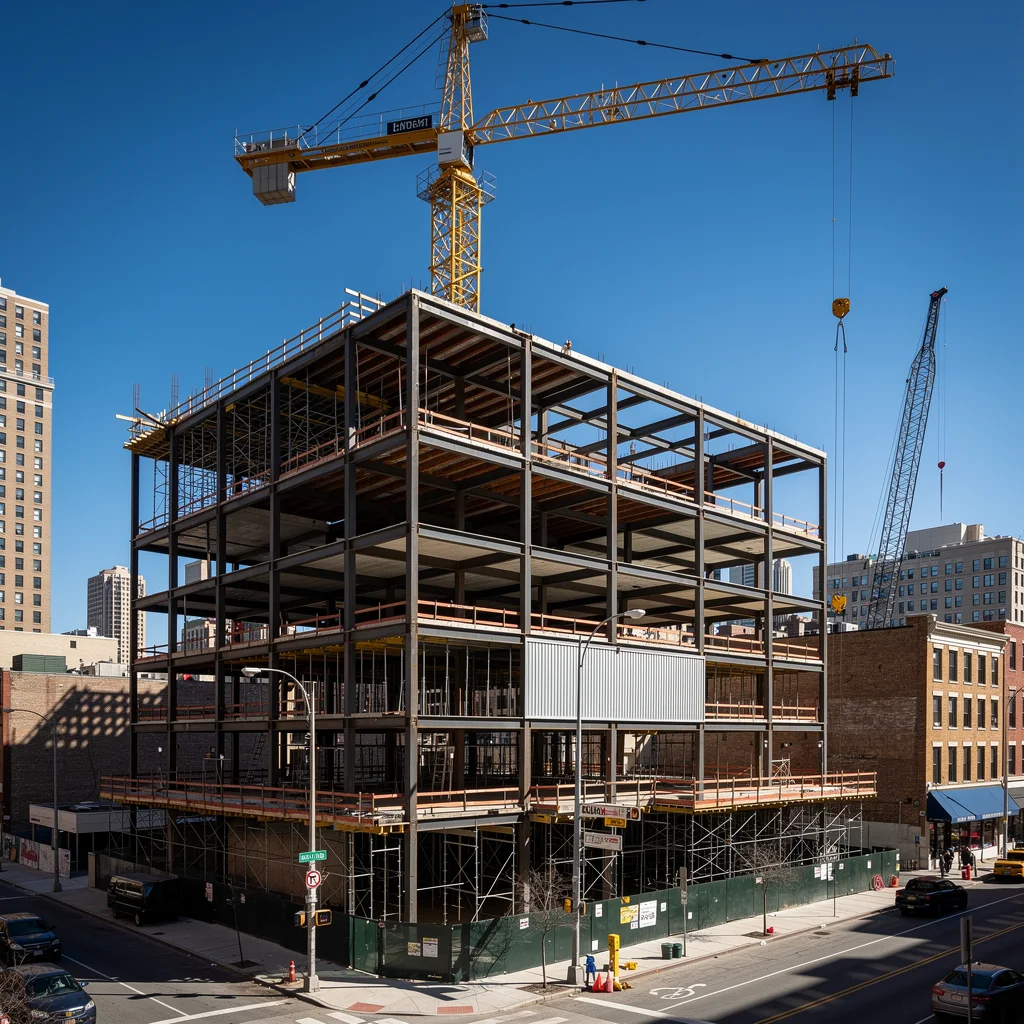
As cities grow upward and construction costs rise, developers and contractors increasingly turn to steel-framed multi-story buildings as a faster, lighter, and more flexible alternative to reinforced concrete.
While concrete dominates high-rise construction in many markets, steel is the preferred choice for mid-rise buildings (4-12 stories) in regions with high labor costs, seismic risk, or tight construction schedules.
This guide covers multi-story steel building design, cost comparison with concrete, and key considerations for international buyers.
Steel vs. Concrete for Multi-Story Buildings
| Factor | Steel Frame | Reinforced Concrete | |--------|:---------:|:-----------------:| | Construction Speed | 3-4 floors/month | 1-2 floors/month | | Floor-to-Floor Height | 3.3-3.6m (shallower beams) | 3.6-4.2m (thicker slabs) | | Structural Weight | Lighter (40-50% less) | Heavier — larger foundation | | Foundation Cost | Lower | Higher (up to 30% more) | | Seismic Performance | Excellent (ductile, energy-absorbing) | Good (needs special detailing) | | Design Flexibility | Easy to modify, add floors | Difficult to modify | | Fire Protection | Required (see our Fire Protection guide) | Built-in (concrete is fire-resistant) | | Demolition/Recycling | 100% recyclable | Difficult, limited recycling | | Cost per m² (structure) | $60-120/m² | $50-100/m² |

Structural Systems for Multi-Story Steel Buildings
1. Moment-Resisting Frames
Rigid beam-column connections that resist lateral loads through frame action:- Best for: Low to mid-rise (up to 8 stories), moderate seismic zones
- Advantages: Open floor plans, no bracing interference with architecture
- Disadvantages: Larger beam sizes needed, higher steel tonnage
2. Braced Frames
Diagonal bracing provides lateral stability, reducing member sizes:- Best for: 4-15 stories, buildings where bracing can be hidden in walls
- Advantages: Lighter sections, lower steel cost (20-30% less than moment frames)
- Disadvantages: Bracing may interfere with openings and layout
3. Composite Construction
Steel beams act compositely with a reinforced concrete slab:- Best for: All building types, most economical for 4-12 stories
- Advantages: Reduced beam depth (saves floor-to-floor height), better fire resistance
- Typical system: Steel beams + metal deck + concrete topping + shear studs
4. Tube Structures
Perimeter columns and spandrel beams form a rigid "tube":- Best for: 10+ stories, high seismic zones
- Advantages: Excellent lateral stiffness, column-free interiors
- Disadvantages: More complex connections, higher fabrication cost
Cost Breakdown per Floor
A typical multi-story steel building in the 6-10 story range:
| Component | Cost per m² | % of Total | |-----------|:----------:|:---------:| | Steel frame (columns, beams, bracing) | $65-95 | 25-35% | | Metal deck & concrete topping slab | $15-25 | 6-10% | | Fire protection (intumescent or board) | $8-15 | 3-6% | | Stairs, railings, miscellaneous steel | $5-10 | 2-4% | | Cladding & facade | $40-80 | 15-25% | | MEP (mechanical, electrical, plumbing) | $50-80 | 18-25% | | Interior fit-out | $30-60 | 10-18% | | Foundation | $10-25 | 4-8% |
Typical total construction cost: $250-450/m² (structure + cladding + MEP + basic fit-out)
> Note: Costs vary significantly by region. The above estimates represent developing-country pricing (Southeast Asia, Africa, Middle East). Developed markets may see 50-100% higher costs.
Design Considerations
Floor-to-Floor Height Optimization
Using composite steel-concrete systems can save 300-400mm per floor vs. concrete:- Steel beam + composite slab: 350-500mm structural depth
- Concrete flat slab: 200-300mm structural depth plus deeper beams for longer spans
- Net saving: 1 extra floor per 10 floors with steel
Seismic Design
Steel performs exceptionally well in earthquakes:- Ductility: Steel can deform significantly before failure, absorbing seismic energy
- Connections: Properly designed welded or bolted connections provide reliable performance
- Codes: ASCE 7 (US), EN 1998 (Eurocode 8), GB 50011 (China) all provide seismic design provisions for steel
Vibration Control
Long-span steel floors can be prone to vibration from walking or equipment:- Increase slab thickness (130-150mm minimum for composite decks)
- Add damping systems for sensitive occupancies (laboratories, hospitals)
- Limit beam span-to-depth ratios to 20-24 for typical office loads

Case Study: 8-Story Steel Office Building
| Parameter | Value |
|---|---|
| Building | Office tower, Lagos, Nigeria |
| Floors | 8 (ground + 7 upper) + rooftop |
| Floor area | 800 m² per floor (6,400 m² total) |
| Structural system | Braced steel frame + composite deck |
| Steel tonnage | 420 tons |
| Fabrication time | 6 weeks (China) + 4 weeks erection (Nigeria) |
| Total schedule | 5 months (vs. 10 months estimated for concrete) |
| Cost saving | 18% vs. concrete alternative |
FAQ
Q: How many stories can a steel frame building go? A: Steel frames are used in buildings from 2 to 100+ stories. For mid-rise (4-12 stories), braced frames or composite construction are most economical. Beyond 12 stories, tube structures or outrigger systems become more efficient.
Q: Is steel more expensive than concrete for multi-story buildings? A: The steel frame itself is typically 15-25% more expensive than a concrete frame. However, when you factor in: faster construction (reduced financing costs), lighter foundations, smaller column sizes (more rentable area), and easier future modifications — steel often delivers a lower total cost.
Q: Can I get a multi-story steel building from a Chinese manufacturer? A: Yes. Chinese manufacturers regularly supply steel frames for buildings up to 15+ stories. The steel is fabricated in China, shipped in containerized bundles, and bolted together on site. Full engineering calculations and shop drawings are included.
Q: How are multi-story steel buildings connected? A: Columns are typically continuous over 2-3 stories (12m lengths). Beam-to-column connections use high-strength bolts (grade 10.9 or 8.8) with end plates or clip angles. Column splices are bolted and located 1.2m above floor level for easy access.
Q: Do multi-story steel buildings need elevators? A: Typically yes for 4+ stories. The structural design must accommodate elevator shafts — usually via braced frames or shear walls around the shaft core.
> Planning a multi-story steel building? Contact Laotie Steel for a free feasibility study and quote. We supply steel frames for commercial, residential, and mixed-use buildings up to 15 stories.
*Related articles:* Steel Structure Building Codes Comparison · Steel Structure Fire Protection Guide · Steel Structure Design Guide for Beginners
Related Articles
Steel Structure Engineering: Design to Construction Workflow
Complete guide to steel structure engineering workflow. Learn each phase from design analysis and connection detailing to fabrication, shipping, and on-site
Crane Beam Design Guide: Steel Structure Loads, Span & Cost
Complete guide to crane beam design for steel structures. Learn overhead crane types, wheel load calculation, span design, connection details, and cost factors.
Need a Steel Structure?
Get a free quote from our engineering team. We respond within 2 hours.
Request a QuoteStay Updated
Get steel structure tips, cost guides, and industry insights delivered to your inbox.
No spam. Unsubscribe anytime.