Sustainable Steel Structures: LEED & Green Building Guide
How steel structures achieve LEED certification and reduce carbon footprint. Learn about recycled steel, energy efficiency, green building credits, and
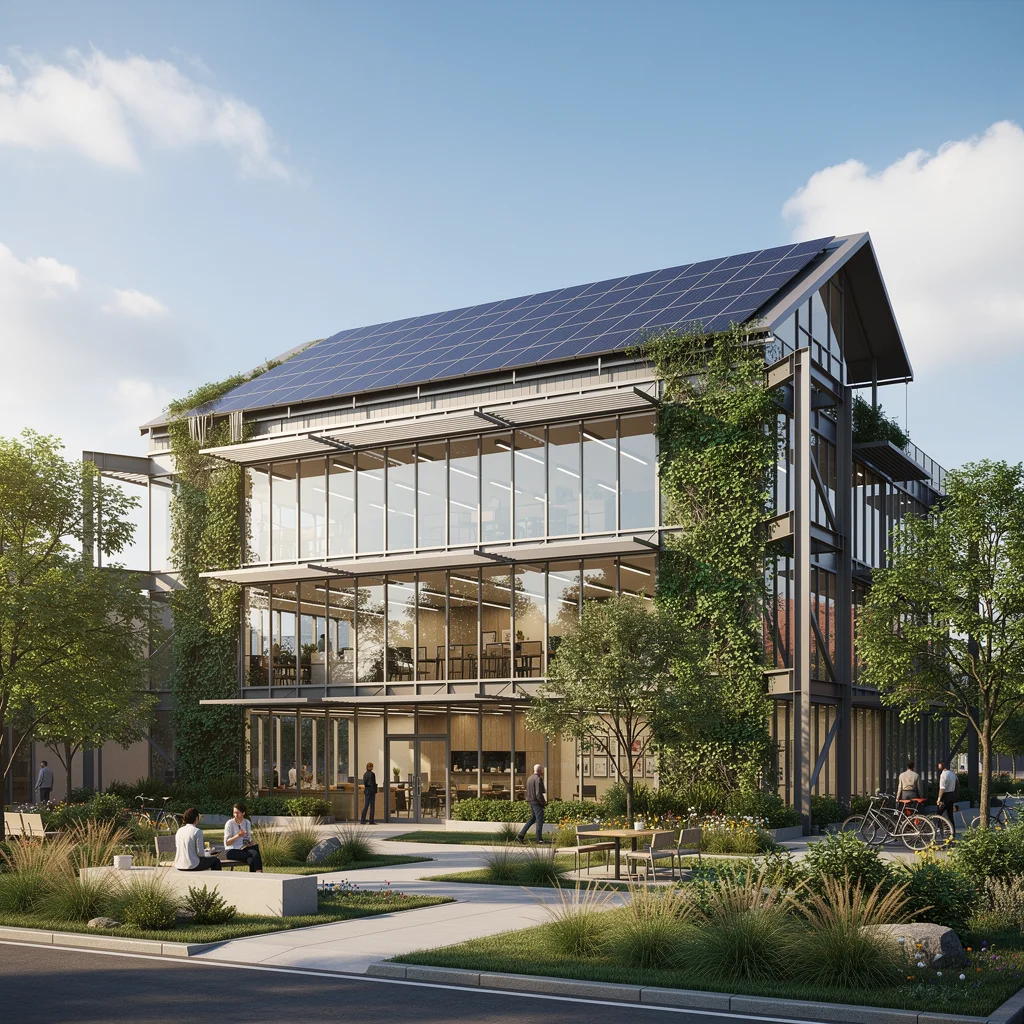
Sustainable Steel Structures: LEED, Green Building & Carbon Footprint Guide 2026
Sustainability isn't just a buzzword in construction anymore — it's a business requirement. Building owners face pressure from investors, regulators, and tenants to reduce environmental impact. And for steel structures, the sustainability story is stronger than most people realize: steel is the most recycled material on Earth, and modern steel buildings can achieve top-tier LEED certifications while costing less than concrete alternatives.
At OldTie Steel Structure, we help clients worldwide achieve their green building goals. This guide explains how steel structures earn sustainability credits, reduce carbon footprint, and qualify for LEED, BREEAM, and other green certifications.
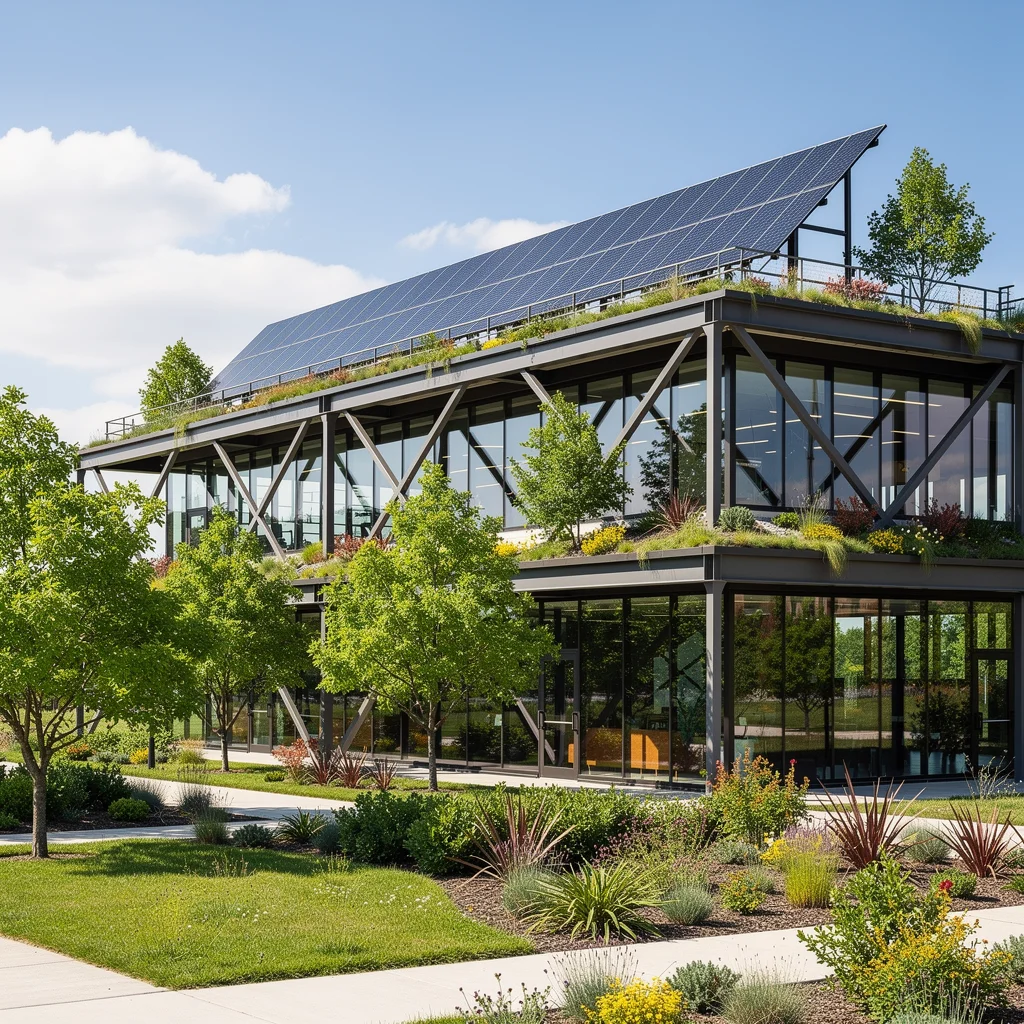
Why Steel Is Inherently Sustainable
1. Infinite Recyclability Without Quality Loss
Steel is 100% recyclable — and unlike paper or plastic, it can be recycled infinitely without any degradation in strength or quality. Every steel beam shipped from OldTie Steel contains recycled content, and at end-of-life, that beam will be melted down and become another product.
| Material | Recycling Rate | Quality After Recycle |
|---|---|---|
| Structural steel | 93–98% | 100% — no degradation |
| Aluminum | 75–90% | 100% |
| Concrete | 50–70% | Downgraded to aggregate |
| Wood | 10–30% | Downgraded to chips |
| Plastic | 9–15% | Significantly degraded |
2. Lower Carbon Footprint Than Concrete
Modern steel production has reduced CO₂ emissions per ton by 36% since 1990. Electric Arc Furnace (EAF) steel — now over 70% of global production — uses primarily scrap steel and emits 60–75% less CO₂ than traditional blast furnace steel.
| Material | Embodied Carbon (kg CO₂e/kg) | 1,000 m² Building (tons CO₂e) |
|---|---|---|
| EAF structural steel | 0.5–0.8 | 45–75 |
| Blast furnace steel | 1.8–2.2 | 160–200 |
| Reinforced concrete | 0.15–0.25 | 180–300* |
| Cross-laminated timber | 0.1–0.3 (biogenic) | 30–90 |
3. Less Material, Less Waste
Steel's high strength-to-weight ratio means:
- 40–60% less material by weight than equivalent concrete structures
- Zero on-site waste — all steel is pre-fabricated to exact dimensions
- Dry construction — no water needed on-site (concrete uses 200+ liters per cubic meter)
LEED Credit Categories for Steel Structures
The LEED v4.1 system offers multiple credit pathways where steel structures excel:
Materials & Resources (MR) Credits
| Credit | Points | How Steel Helps | Target |
|---|---|---|---|
| Building Life-Cycle Impact Reduction | 2–5 | Steel's recyclability + durability = low lifecycle impact | 10%+ reduction |
| Environmental Product Declarations | 1–2 | EPDs available for all steel products | 20+ products |
| Sourcing of Raw Materials | 1–2 | Recycled content documentation, responsible sourcing | 25%+ recycled |
| Material Ingredients | 1–2 | Steel chemistry documentation, no harmful substances | Full disclosure |
| Construction Waste Management | 1–2 | Pre-fabricated steel = zero cut waste on site | 75%+ diversion |
Energy & Atmosphere (EA) Credits
| Credit | Points | How Steel Helps |
|---|---|---|
| Optimize Energy Performance | 1–18 | Steel allows larger windows for daylighting; lighter structure = smaller HVAC |
| Renewable Energy | 1–3 | Steel roof structure supports solar panel arrays (25–35 kg/m² additional load) |
Innovation in Design
| Credit | Points | Application |
|---|---|---|
| Innovation Credit | 1–5 | Document steel's carbon reduction vs. concrete baseline |
| LEED Accredited Professional | 1 | Include LEED AP on design team |
Design Strategies for Green Steel Buildings
1. Optimize Steel Tonnage
Less steel = lower embodied carbon. Strategies:
- Space frame systems for large spans (15–25% less steel than portal frames above 50 m)
- Composite design: Steel beams act compositely with concrete slab, reducing beam depth by 15–25%
- Performance-based design: Avoid over-engineering; use wind tunnel testing for tall buildings
- Cellular beams: Castellated beams with web openings reduce weight by 20–30% while accommodating services
2. Specify High-Recycled-Content Steel
| Steel Type | Typical Recycled Content | CO₂ Saving vs BF Steel |
|---|---|---|
| EAF steel (global average) | 70–90% | 60–75% |
| EAF steel (best-in-class) | 95–99% | 75–85% |
| BF-BOF steel | 25–35% | Baseline |
OldTie Steel uses EAF-produced steel with 92%+ recycled content — documented for your LEED submission.
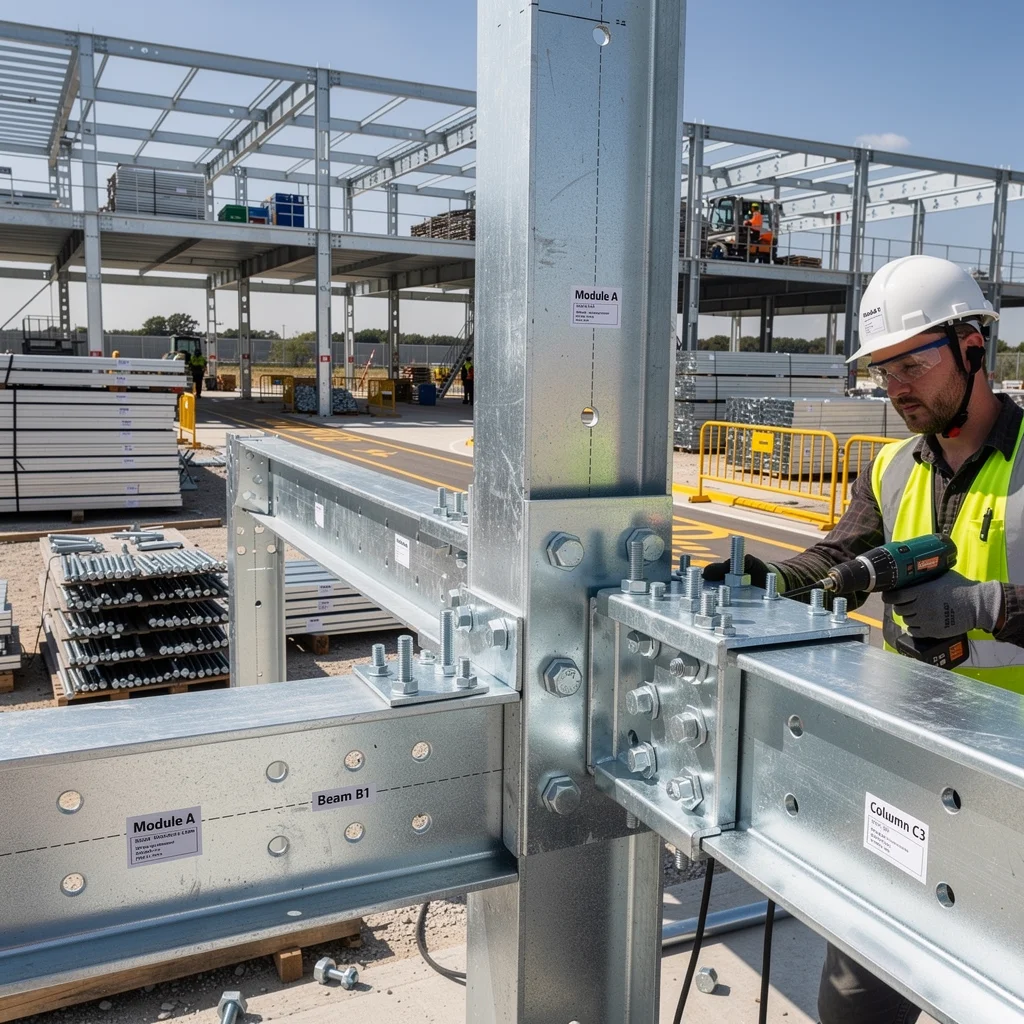
3. Design for Deconstruction
Steel buildings can be designed for future disassembly and reuse:
- Bolted connections (not welded) for all primary connections
- Standardized member sizes to maximize future reuse
- Beam-to-column connections that allow reverse-sequence dismantling
- Material passports: RFID or QR-coded documentation of steel grade and source
4. Integrate Renewable Energy
Steel structures are ideal hosts for building-integrated photovoltaics (BIPV):
| Roof Type | Solar Panel Suitability | Additional Steel Required |
|---|---|---|
| Flat roof (steel deck) | Excellent — ballasted or fixed mount | +5–8 kg/m² |
| Low-slope metal roof | Excellent — standing seam clamp mount | +3–5 kg/m² |
| Space frame roof | Good — integrated mounting points | +5–10 kg/m² |
| Atrium/glass roof | BIPV glass panels replace glazing | +10–15 kg/m² |
Green Building Certifications Comparison
| Certification | Region | Steel Advantage | Typical Cost Premium |
|---|---|---|---|
| LEED | Global (US origin) | High recycled content + fast construction | 2–8% |
| BREEAM | Europe, Middle East | Low embodied carbon + lifecycle durability | 1–5% |
| Green Star | Australia, NZ, South Africa | Zero waste + material efficiency | 2–6% |
| EDGE | Emerging markets | 20%+ energy/water savings vs. local baseline | 0–3% |
| GSAS | Middle East (Qatar) | Energy optimization + recycled materials | 3–10% |
Cost & ROI of Green Steel Buildings
Upfront Cost Premium
| Green Feature | Cost Premium | Payback Period |
|---|---|---|
| EAF high-recycled steel | 0–3% | Immediate (same price in many markets) |
| Enhanced insulation (R-30+) | $8–15/m² | 2–5 years (energy savings) |
| Solar PV integration | $80–150/m² | 5–10 years |
| Green roof (extensive) | $25–50/m² | 8–15 years |
| LEED certification process | $5–15/m² | 3–7 years (premium rents) |
Long-Term ROI
Green-certified buildings command:
- 3–8% higher rental rates (JLL, CBRE data)
- 7–12% higher resale value
- 15–25% lower operating costs (energy + water)
- Higher occupancy rates — 4–8% above non-certified buildings
Carbon Accounting: How to Measure Your Steel Building's Footprint
Embodied Carbon (A1–A3: Product Stage)
``
Embodied Carbon = Steel Tonnage × EAF Emission Factor (kg CO₂e/ton)
Example:
  200 tons steel × 600 kg CO₂e/ton = 120 tons CO₂e
  Equivalent concrete building: ~250 tons CO₂e
  → 52% carbon saving with steel
``
Whole-Life Carbon (A–D: Full Lifecycle)
| Lifecycle Stage | Steel | Concrete | Steel Benefit |
|---|---|---|---|
| A1–A3: Product | 120 tCO₂e | 250 tCO₂e | -52% |
| A4–A5: Construction | 8 tCO₂e | 25 tCO₂e | -68% (dry, fast) |
| B1–B7: Use (50 years) | 15 tCO₂e | 30 tCO₂e | -50% (lower maintenance) |
| C1–C4: End-of-life | -180 tCO₂e* | +5 tCO₂e | Net negative |
| Total | -37 tCO₂e | 310 tCO₂e | Carbon negative |
FAQ
Is steel really "green" when its production uses so much energy?
Modern EAF (Electric Arc Furnace) steel production uses 60–75% less energy than traditional blast furnaces and runs predominantly on electricity — increasingly from renewable sources. Combined with 93%+ recycling rates, steel's lifecycle carbon is lower than any other structural material.
Can a steel building achieve LEED Platinum?
Yes. Steel buildings have achieved LEED Platinum worldwide. The key is combining steel's inherent advantages (recycled content, construction waste reduction) with energy-efficient design, renewable energy, water conservation, and healthy indoor environments.
Does green steel cost more than regular steel?
EAF steel with high recycled content costs the same or marginally more (0–3%) than conventional steel in most markets. The "green premium" has virtually disappeared as EAF becomes the dominant production method globally.
How do I document recycled content for LEED?
We provide certified mill test reports showing recycled content percentage for every heat of steel. Combined with Environmental Product Declarations (EPDs), this satisfies LEED MR credit documentation requirements.
What about operational carbon — does a steel building use more energy for heating/cooling?
No. Steel buildings achieve equivalent or better thermal performance when properly insulated. The lighter thermal mass of steel structures actually allows faster temperature adjustment — an advantage in intermittently occupied buildings. For continuously occupied buildings, exposed steel can be coupled with phase change materials for thermal mass.
Build Green with OldTie Steel
Steel is the most sustainable structural material available today — and OldTie Steel makes it accessible worldwide. Our EAF-produced steel with 92%+ recycled content helps your project achieve LEED, BREEAM, and other green certifications at competitive prices.
We provide:
- EPD-certified structural steel (ASTM, EN, JIS, GB standards)
- Recycled content documentation for LEED/BREEAM credits
- Design optimization to minimize tonnage
- Modular, deconstructable connection design
- Full carbon accounting reports
Related Articles
How to Estimate Structural Steel: A Step-by-Step Guide for 2026
How to estimate structural steel in 6 steps: calculate floor area, apply tonnage factors, convert price to cost per m2, add fabrication, shipping and erection.
Steel Warehouse Quotation: 10 Questions to Ask
10 questions every buyer must ask before ordering a steel warehouse. Compare quotes apple-to-apple: steel grade, tonnage, surface treatment, inclusions
Need a Steel Structure?
Get a free quote from our engineering team. We respond within 2 hours.
Request a QuoteStay Updated
Get steel structure tips, cost guides, and industry insights delivered to your inbox.
No spam. Unsubscribe anytime.