Typical Scenario: 3,000 m² Steel Warehouse in the Nairobi Area
Illustrative engineering notes and indicative FOB cost ranges for a typical 3,000 m² distribution warehouse in the Nairobi area. Not a specific client project.
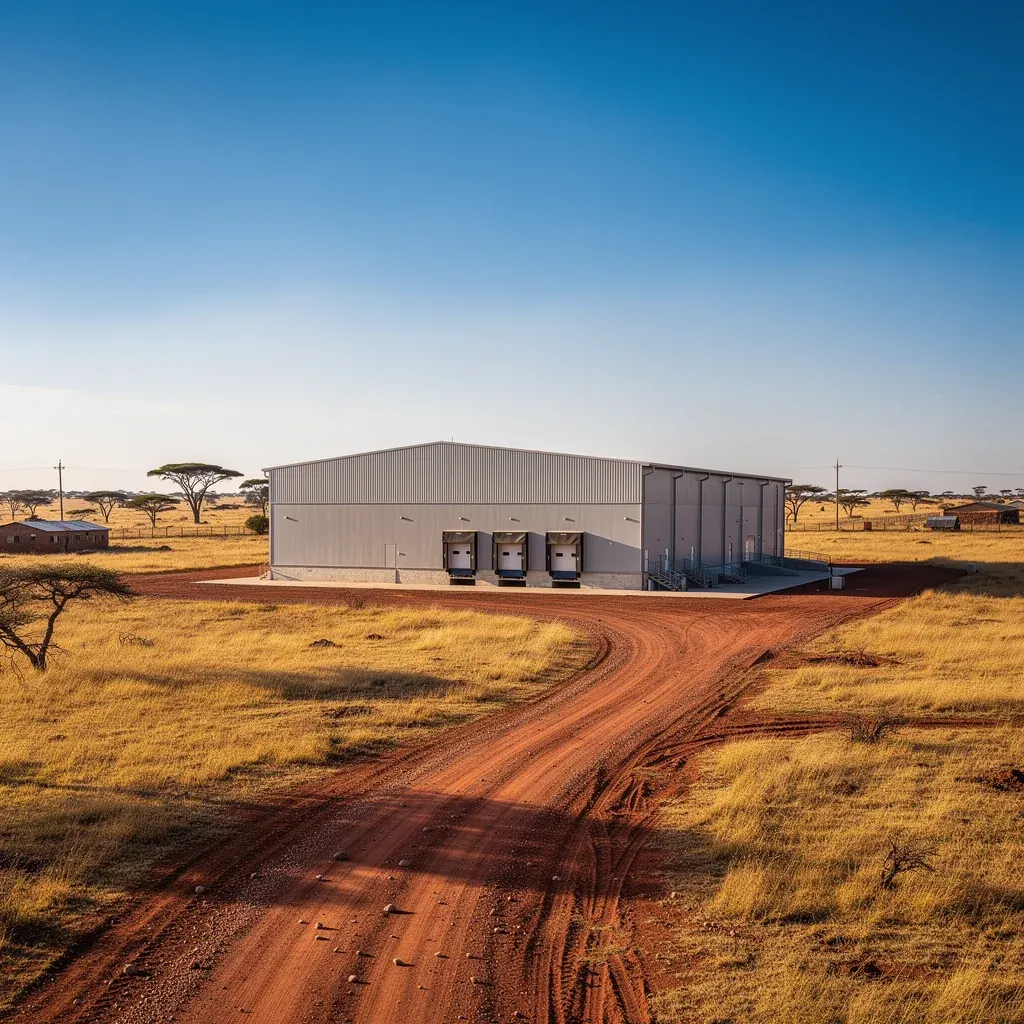
Illustrative photo of a typical clear-span distribution warehouse. Not a specific client project in the Nairobi area.
This is an illustrative scenario based on typical 3,000 m² distribution warehouses in the Nairobi area, not a specific client project.
Buyers weighing a local build against a prefabricated steel warehouse from a steel structure manufacturer China supplier can use this scenario to see a typical engineering outline, indicative FOB cost lines, and a usual site sequence. Every figure below is an indicative planning range. None of it is a quotation, and none of it records a finished job.
Typical Building Outline
| Item | Typical specification |
|---|---|
| Setting | Nairobi area, Kenya |
| Building footprint | 3,000 m² warehouse + 400 m² mezzanine |
| Dimensions | 75 m × 40 m × 10.5 m eave height |
| Structural system | Single-storey portal frame |
| Span | 40 m clear span (no interior columns) |
| Steel grade | Q355B primary frame, Q235B secondary |
| Surface treatment | Epoxy zinc-rich primer + polyurethane topcoat |
| Cladding | Galvalume single-skin roof and wall sheets |
| Accessories | 6 roller shutter doors, 2 personnel doors, gutters, downpipes |
Design and Engineering
A typical design phase for this outline is about two weeks. This illustration uses a wind load of 0.85 kN/m² as a stand-in for Kenyan wind zoning on a warehouse of this size, a roof live load of 0.5 kN/m², and foundation loads passed to a local structural engineer. The usual drawing package includes shop drawings, a bolt list, and an English steel structure installation guide for that engineer to review before fabrication.
Indicative Cost Ranges
Only the fabrication lines are FOB China. Freight, duties, local transport, the foundation, and installation labor are separate indicative allowances. Payment on the steel package is a 30% T/T deposit, with the balance paid before shipment.
The table is an indicative steel warehouse cost 2026 build-up for this typical scenario, in USD and Kenyan shillings (KES) at an approximate rate of 1 USD = 129 KES. Treat every figure as a typical planning number, not an invoice.
| Cost item | Indicative USD | Indicative KES | Notes |
|---|---|---|---|
| Steel fabrication (FOB China) | about $78,000 | about KES 10.1M | Main frame, purlins, girts, bracing |
| Roof and wall cladding | about $42,000 | about KES 5.4M | Galvalume sheets, flashings, fasteners |
| Doors and accessories | about $8,500 | about KES 1.1M | 6 roller shutters, 2 personnel doors |
| Surface treatment | about $12,000 | about KES 1.5M | Shot blast + epoxy + polyurethane |
| Engineering drawings | Included | — | Part of the fabrication package |
| Ocean freight (Mombasa) | about $18,000 | about KES 2.3M | 7 × 40HQ containers |
| Import duties and clearance | about $14,000 | about KES 1.8M | About 5% duty plus port fees and VAT |
| Local transport to site | about $4,500 | about KES 580K | Mombasa to the Nairobi area |
| Foundation | about $55,000 | about KES 7.1M | Spread footings on good soil |
| Installation labor | about $35,000 | about KES 4.5M | Local crew with remote supervision |
| Indicative total | about $267,000 | about KES 34.4M | about $89 / m² |
Typical Fabrication and Shipping Sequence
Factory delivery is 15–30 days, depending on project size. The other rows are indicative allowances for a building of this size. They are not dates from a finished shipment.
| Phase | Indicative duration | What usually happens |
|---|---|---|
| Drawing approval | about 2 weeks | Shop drawings reviewed by a local engineer |
| Factory production and packing | 15–30 days | Cutting, welding, surface treatment, drilling, and container packing at the Shangqiu, Henan factory |
| Ocean freight | about 28 days | Transit toward Mombasa |
| Customs clearance | about 10 days | Duty payment, inspection, release |
| Site transport | about 3 days | Mombasa to a site in the Nairobi area |
| Indicative time before erection | about 10–12 weeks | Planning range only: drawing approval, factory delivery, ocean freight, customs, and site transport |
Typical On-Site Installation
Erection for a building of this size is often planned at about six weeks with a local crew of about 12. Remote support from the factory's installation engineer, often by video call, is the usual pattern. The standard steel structure installation guide sequence is:
- Foundation inspection — check anchor bolt positions to about ±2 mm
- Column erection — lift and plumb about 40 main columns with a 50-ton mobile crane
- Rafter installation — connect roof beams with high-strength 10.9S bolts
- Bracing and purlins — install roof and wall bracing to stabilize the frame
- Cladding — install roof and wall sheets, and seal flashings with butyl tape
- Doors and gutters — hang the roller shutter doors and connect the drainage system
Issues That Often Come Up
Anchor bolt position
A common site issue is a few anchor bolts sitting 8–10 mm out of position. Welding washer plates to the base plates is a usual correction and avoids foundation rework.
Rain during cladding
Kenya's short rains can fall during cladding. Crews often shorten shifts, cover partly installed roof sheets, and allow about one extra week. Planning for that weather before the steel leaves the factory reduces the chance of material damage.
Checks Buyers Usually Specify
These are typical acceptance checks for this outline, not measurements from a finished building:
- Overall dimensions within about ±10 mm of the drawings
- Bolted connections torqued to the specification
- Roof and wall details set up with the rainy seasons in mind
- Coating dry film thickness around 185 μm at the points that are tested
Notes for Buyers Planning a Similar Warehouse
- Start with a local engineering review. Have a Kenyan engineer review the drawings early, so foundation and code questions surface before fabrication.
- Plan for weather. Build a buffer into the erection schedule for rain, dust, or high winds.
- Use a third-party inspection. A pre-shipment inspection in China is worth the cost for a first order.
- Keep spare fasteners. Ask for about 2% extra bolts and screws to replace items lost or damaged on site.
FAQ
Is this a real client project in Nairobi?
No. This is an illustrative scenario based on typical 3,000 m² distribution warehouses in the Nairobi area, not a specific client project.
Are the cost figures a firm quotation?
No. They are indicative typical figures for planning. Steel fabrication is priced FOB China. Payment is a 30% T/T deposit, with the balance paid before shipment.
How long does the factory take to ship a building of this size?
Factory delivery is 15–30 days, depending on project size. Ocean freight, customs clearance, and site erection sit outside that window and vary with the route and the local crew.
Closing
This scenario is a planning picture for a steel warehouse of about 3,000 m² in the Nairobi area: engineering assumptions, indicative FOB cost lines, and a usual erection sequence. Buyers planning a similar building should use a manufacturer certified to CE (EN 1090), TÜV and ISO 9001, allow time for a local engineering review, and prepare the site before the steel leaves the Shangqiu, Henan factory.
Contact Laotie for a free quote → WhatsApp: +86 166-5073-5555
*Laotie Steel Structure: Factory-direct steel warehouses, exported from Shangqiu, Henan, China.*
Related Articles
C Purlin vs Z Purlin: Sizes, Spacing, Load & Price 2026
Compare C purlin vs Z purlin: sizes, spacing rules by cladding, load capacity, lapping and coating. Factory-direct cold-formed purlin specs from a CE and ISO 9001 plant.
Steel Grade Equivalents: Q235, Q355 vs S355, A36 and SS400
Steel grade equivalent chart for buyers: Q235 vs Q355, S235/S355, ASTM A36 and SS400. Compare yield, impact toughness, welding and CE/EN 1090 fit from a CE/ISO factory.
Need a Steel Structure?
Get a free quote from our engineering team. We respond within 2 hours.
Request a QuoteStay Updated
Get steel structure tips, cost guides, and industry insights delivered to your inbox.
No spam. Unsubscribe anytime.