Steel Structure Warehouse Design: Clear Span & Layout
Expert guide to steel structure warehouse design. Learn about clear span configurations, crane systems, mezzanine floors, eave height, column spacing, and
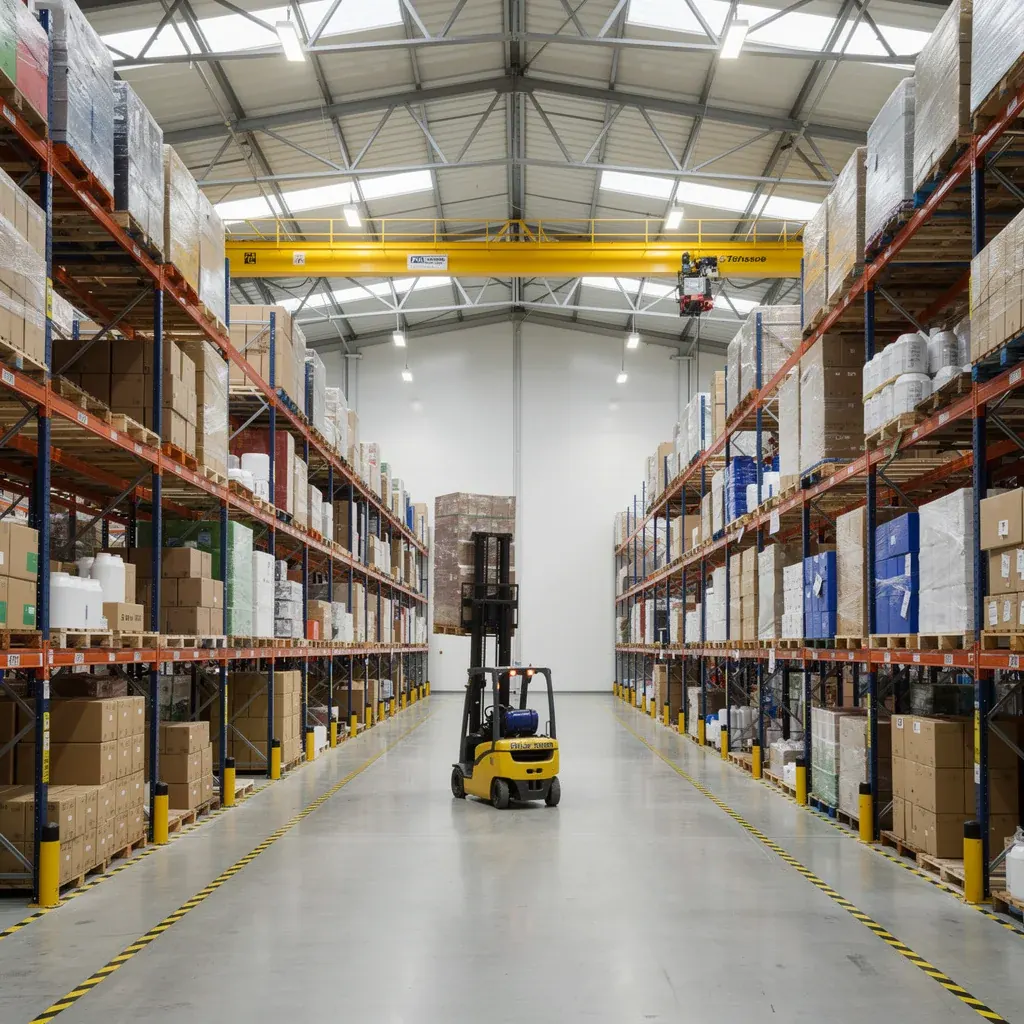
Designing a steel structure warehouse involves more than just sizing beams and columns. The right design choices affect storage capacity, operational efficiency, expansion options, and long-term costs.
This guide covers the key design decisions for steel warehouses — from structural configuration to layout planning.
Clear Span vs Multi-Span Configuration
The first and most important design decision is whether to use clear span or multi-span:
| Factor | Clear Span | Multi-Span |
|---|---|---|
| Maximum width | Up to 60m (single span) | Unlimited (multiple bays) |
| Interior columns | None | One row every 20-30m |
| Cost per sqm | Higher (larger sections needed) | Lower (lighter sections) |
| Storage flexibility | Excellent — no column obstructions | Good — columns must be planned around |
| Best for | Warehouses, hangars, sports halls | Factories, workshops, large distribution centers |
When to Choose Clear Span
Choose clear span when:
- You need unobstructed floor space for racking systems or equipment
- You operate forklifts and heavy machinery that need clear movement paths
- Future layout changes are expected (clear span = maximum flexibility)
- Width requirements are under 36m (most cost-effective range)
When to Choose Multi-Span
Choose multi-span when:
- Building width exceeds 40m
- Budget is the primary constraint
- Column locations can be fixed (aligned with racking lanes)
- You need a very large continuous area at lower cost
Eave Height
Eave height directly determines usable storage volume. Common heights:
| Eave Height | Typical Use | Storage Capacity |
|---|---|---|
| 6-8m | Small warehouses, workshops | 2-3 pallet levels |
| 9-12m | Standard warehouses | 4-6 pallet levels |
| 12-15m | High-bay warehouses | 6-9 pallet levels |
| 15-20m+ | Automated storage | 9-12+ pallet levels |
> Rule of thumb: For most warehouses, 10-12m eave height offers the best balance of construction cost and storage density.
Crane Systems
If your warehouse needs overhead cranes, the design changes significantly:
| Crane Type | Capacity | Building Requirements |
|---|---|---|
| Single girder | 1-10 tons | Standard frame with crane brackets |
| Double girder | 10-50 tons | Heavier columns, crane columns, stiffer frame |
| Underhung | 1-5 tons | Runs on bottom flange of roof beams |
| Gantry | 1-20 tons | Freestanding — does not connect to building frame |
- Crane column: Separate column or bracket on main column — affects bay spacing
- Crane beam: Rolled section or built-up plate girder
- Crane rail: Must be level and aligned within tight tolerances
- Power supply: Conductor bar system along the crane runway
- Maintenance platform: Access walkway along the crane beam
Bay Spacing and Column Layout
The distance between frame centers (bay spacing) affects both cost and functionality:
| Bay Spacing | Pros | Cons |
|---|---|---|
| 6m | Lower frame cost, simpler erection | More columns inside building |
| 7.5m | Good balance for most warehouses | — |
| 8-9m | Fewer columns, better layout flexibility | Heavier rafters and purlins |
| 10-12m | Maximum open space | Significantly higher frame cost |
Mezzanine Floors
Mezzanines double your usable floor area without expanding the building footprint:
| Mezzanine Type | Structure | Typical Load |
|---|---|---|
| Steel grating | Light steel beams + grating | 2.5-5 kN/m² |
| Concrete on metal deck | Composite deck + concrete topping | 5-10 kN/m² |
| Heavy-duty | Steel beams + precast planks | 10-25 kN/m² |
Roof Design Options
| Roof Type | Slope | Best For |
|---|---|---|
| Single slope | 5-10% | Narrow buildings (up to 30m wide) |
| Double slope (gable) | 5-15% | Standard warehouses (30-80m wide) |
| Multi-gable | 5-10% | Very wide buildings (80m+) |
| Flat (minimal slope) | 1-3% | Urban areas with height restrictions |
- Skylights — translucent panels (FRP or polycarbonate) at 5-8% of roof area for natural lighting
- Ridge ventilators — passive exhaust for hot air buildup
- Gutters and downpipes — sized for local rainfall intensity
- Solar panel supports — if future PV installation is planned
Dock and Door Planning
Proper dock design is critical for warehouse operations:
| Door Type | Size | Application |
|---|---|---|
| Personnel door | 0.9m x 2.1m | Pedestrian access |
| Sectional overhead door | 3-5m x 4-6m | Truck access — most common |
| Dock leveler door | 2.5m x 3m | Loading bay with dock leveler |
| Rapid roll door | 2-3m x 3-5m | High-traffic areas, temperature control |
- One dock door per 500-800 sqm of warehouse space
- Dock height: 1.2-1.4m above grade (matches truck bed height)
- Apron depth: minimum 30m for truck maneuvering
- Dock shelter/seal: essential for weather and pest protection
Fire Safety Design
Steel warehouses require fire protection:
| Method | Application | Cost Impact |
|---|---|---|
| Intumescent coating | Spray-on fireproofing for structural steel | $5-15/m² of steel surface |
| Sprinkler system | Automatic fire suppression | $5-10/m² of floor area |
| Fire-rated walls | Separate fire zones in large buildings | Varies |
| Smoke vents | Automatic roof vents for smoke exhaust | $500-2,000 per vent |
Design Process with Laotie Steel Structure
When you work with us on a warehouse design, here is the process:
- Requirements gathering — dimensions, loads, crane, dock, mezzanine needs
- Preliminary design — structural layout, bay spacing, eave height, column grid
- Structural calculation — load analysis, member sizing, connection design
- Shop drawings — detailed fabrication drawings for every component
- Erection drawings — step-by-step assembly instructions
Get Started on Your Warehouse Design
Ready to design your steel warehouse? Our engineering team can help optimize your layout for maximum storage efficiency and minimum cost.
Use our Cost Calculator for a quick estimate, or contact us with your project requirements for a detailed design proposal within 24 hours.
Related Articles
Steel Structure Seismic Design: Earthquake-Resistant Guide
Complete guide to earthquake-resistant steel structure design. Learn about seismic codes, ductility design, braced frames, base isolation, and cost
Steel Structure Commercial Buildings: Design & Cost Guide
Complete guide to steel structure commercial buildings. Learn about office buildings, retail centers, shopping malls, hotels, and mixed-use developments
Need a Steel Structure?
Get a free quote from our engineering team. We respond within 2 hours.
Request a QuoteStay Updated
Get steel structure tips, cost guides, and industry insights delivered to your inbox.
No spam. Unsubscribe anytime.